Hanbok is traditional Korean clothing, not the name of one identical outfit. Three useful starting terms are jeogori for the upper garment, chima for a skirt, and baji for trousers. Recognizing the pieces makes museum labels and rental descriptions easier to follow.
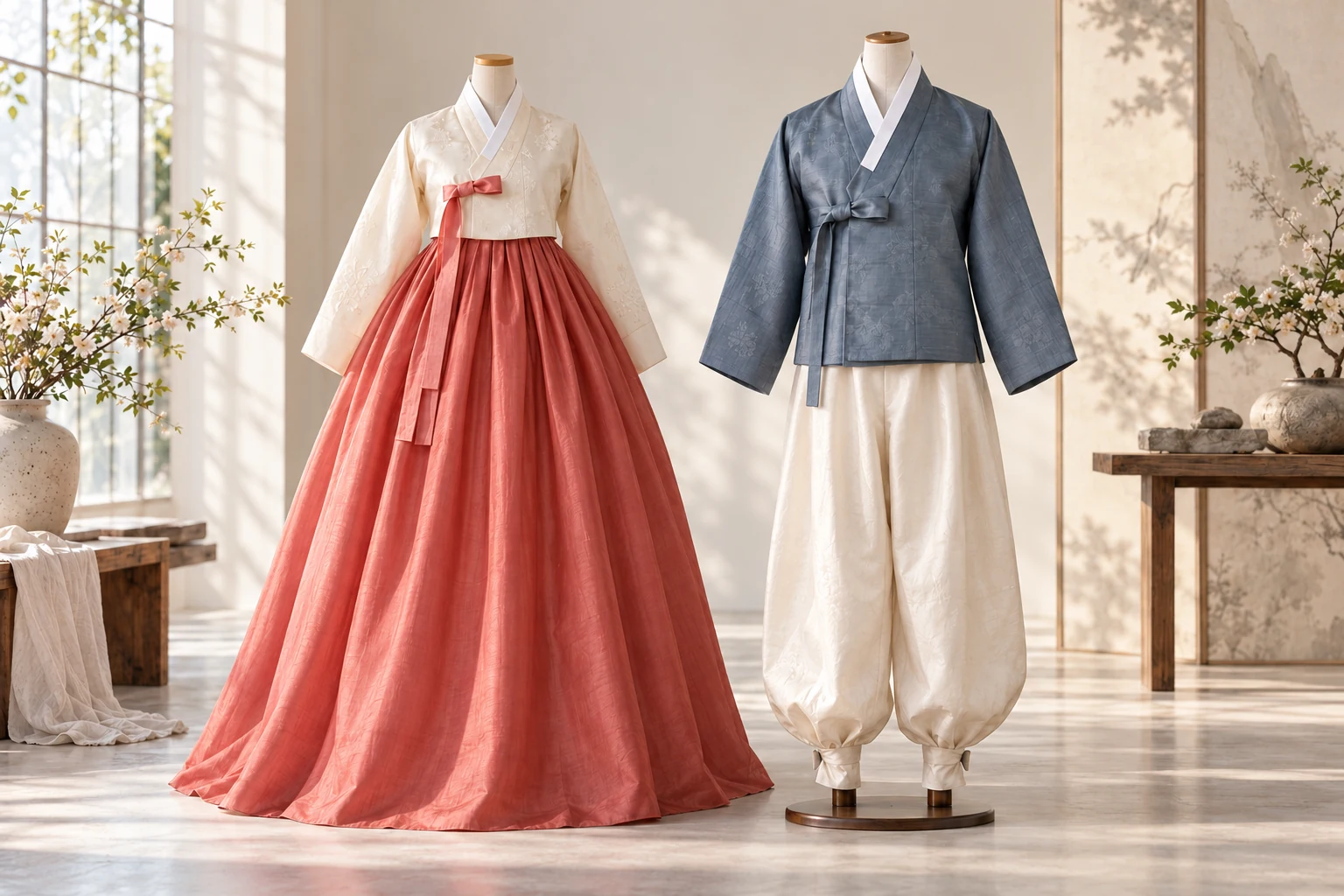
Read an outfit piece by piece
Seoul’s traditional-culture guide describes upper and lower garments alongside outer layers such as the durumagi. Start with the top and bottom before trying to identify accessories. These AI-generated modern illustrative ensembles introduce garment categories, not a pattern for constructing a historically accurate garment.
Culture and admission rules are different questions
Planning a palace visit? The Royal Palaces and Tombs Center says qualifying hanbok generally requires both an upper and a lower garment. Wearing only an outer coat, or combining a hanbok top with jeans, does not meet that guidance. Traditional and modernized hanbok may qualify, subject to the full rules. Check the official page before renting; this is not a guarantee for every venue or event.
A useful rental checklist
Ask which pieces are included, how the garment fastens, whether you can walk comfortably, and what the return time is. Take time to understand the rental terms rather than assuming a photograph shows everything included. No shop has been tested or recommended in this guide.
Avoid one-size-fits-all cultural claims
A costume display, ceremonial outfit, and contemporary interpretation serve different purposes. Read the description for the specific garment. Do not use a modern rental outfit as proof of what all Koreans wore at one point in history.
Official sources
Sources checked October 27, 2026 (KST).
QUESTIONS & EXPERIENCES
Comments 0
Share a question or experience about this guide, then keep the conversation going with replies.
No published comments yet. Be the first to share a question or experience.