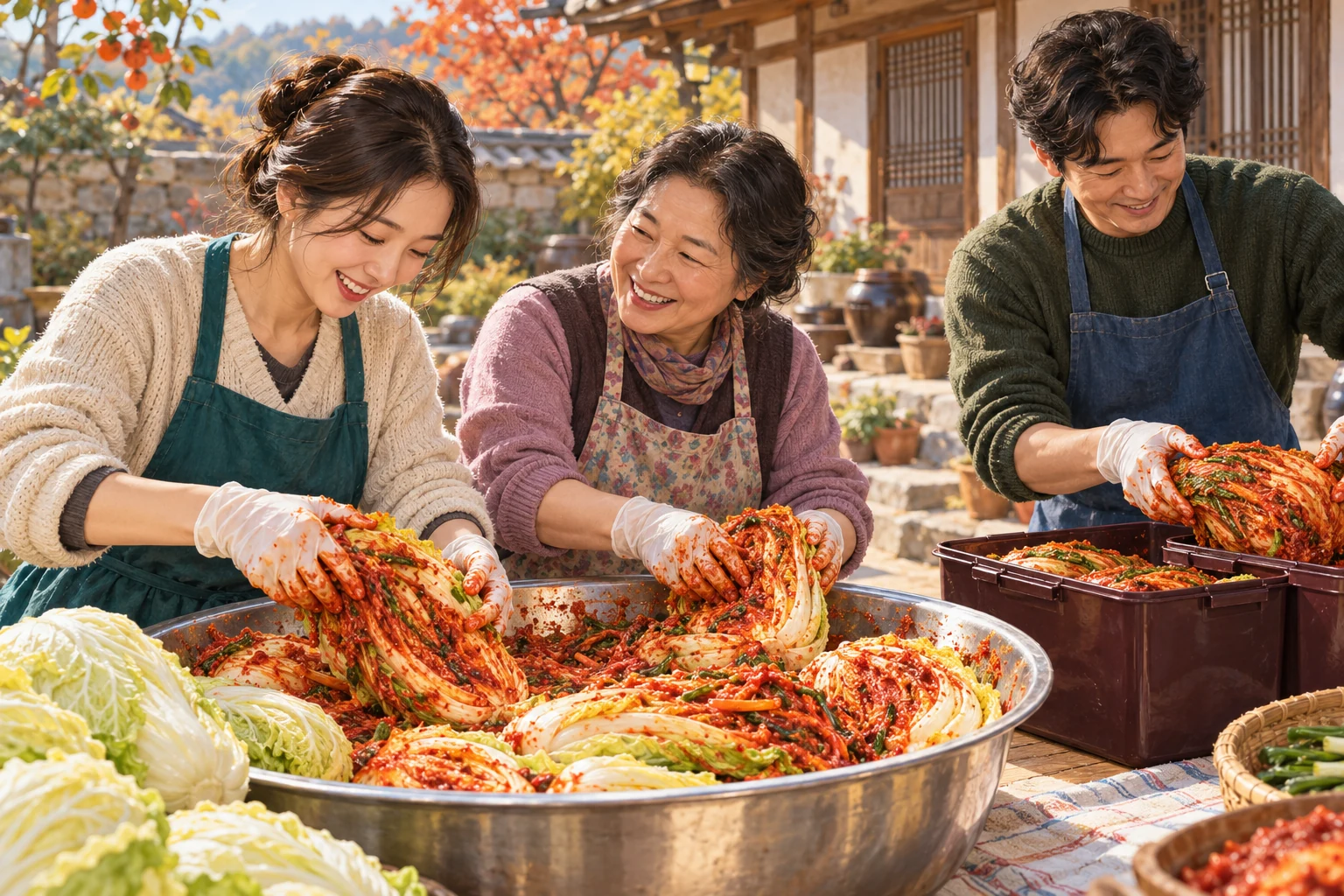
Kimjang is the tradition of preparing and sharing kimchi in quantity, especially in preparation for winter. The cultural meaning lies in the work and relationships around the food, not only in the finished jar.
How it differs from one recipe
An official Korean cultural report explains that families and neighbors worked together on a labor-intensive seasonal task. Recipes and methods varied by household and region. It records the 2013 inscription of kimjang on UNESCO’s Representative List, emphasizing community ties and communication.
Three questions that reveal the culture
When reading about a kimjang gathering, ask who shares the preparation, how knowledge is passed on, and who receives the finished food. A recipe answers a different question: exactly what ingredients and method should this batch use? Keeping the two questions separate helps you appreciate both.
If you join a workshop
Ask the organizer about ingredients, food handling, allergens, the container provided, and how to transport and store the food. Do not infer a safe fermentation method from a cultural history article. This page is not a recipe, medical claim, or guarantee about a workshop we have not attended.
Leave room for different households
Do not assume every Korean family makes kimchi in the same way—or that everyone makes it at home. An account of a tradition describes a practice, not an obligation imposed on every person. If you share a photograph of a gathering, get the participants’ permission and respect the photographer’s rights. Our illustration shows the idea of shared work, not a documented event.
Official sources
Sources checked October 27, 2026 (KST).
QUESTIONS & EXPERIENCES
Comments 0
Share a question or experience about this guide, then keep the conversation going with replies.
No published comments yet. Be the first to share a question or experience.