Cook spicy marinated chicken, cabbage, sweet potato and rice cakes together in a wide pan. This dakgalbi (닭갈비) uses boneless thighs and a gochujang sauce, without deep-frying. It is an independently written, source-informed adaptation; we have not cooked or taste-tested it.

Before you start
Yield: 3 portions. Use a large, deep-sided skillet with a lid, a clean spoon and an instant-read food thermometer. Allow 30 minutes of refrigerated marinating; cooking time depends on piece size, pan and heat, so no fixed total is promised. Keep raw chicken and its utensils away from ready-to-eat food, and do not wash raw chicken.
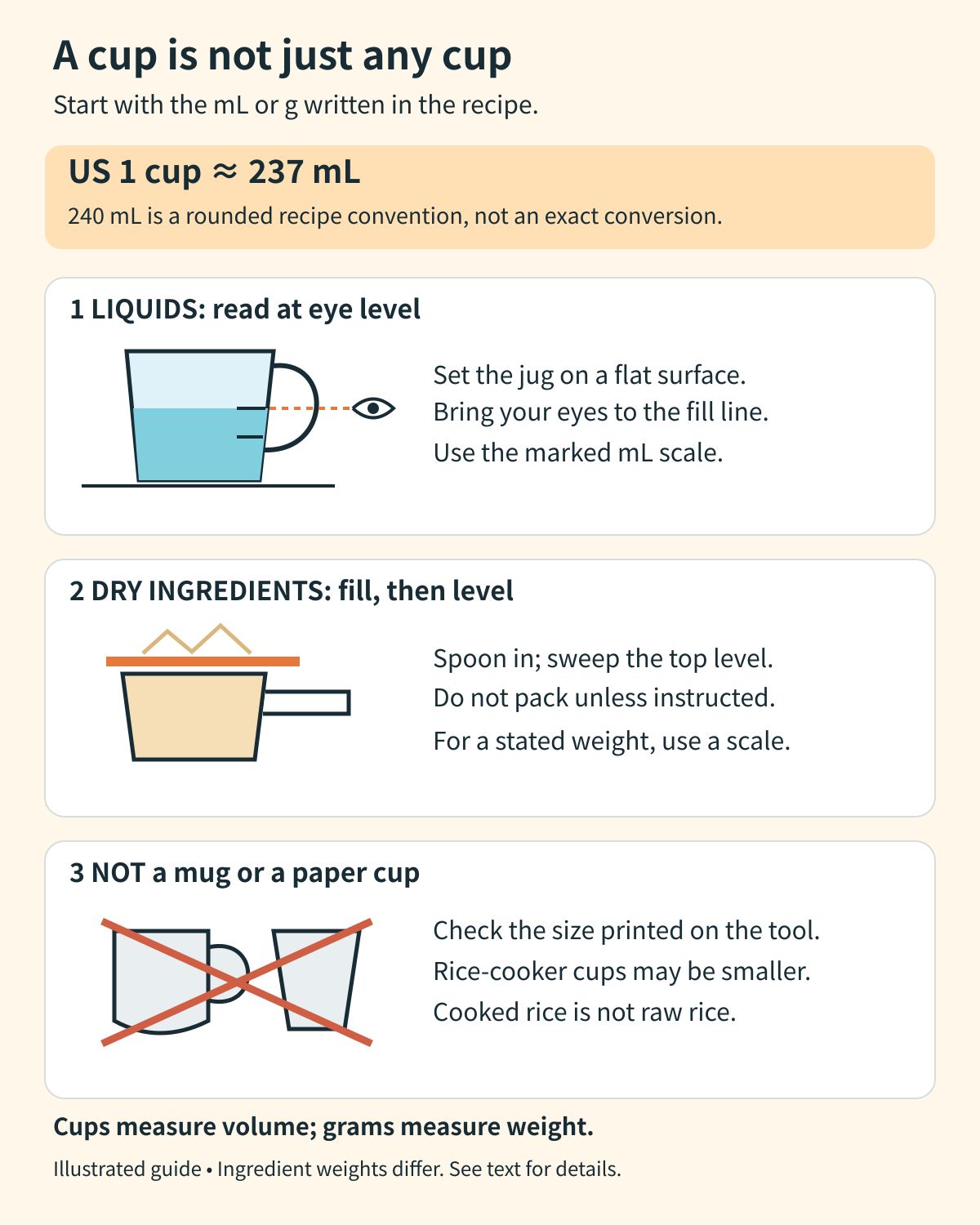
Metric weights are rounded. Spoon volumes are not gram weights: 1 tablespoon ≈ 15 mL; 1 teaspoon ≈ 5 mL; ¼ US cup ≈ 60 mL.
Which measuring cup?
Use the stated mL or g when supplied. See our visual measuring guide and unit notes.
Ingredients
- 1 lb (454 g) boneless, skinless chicken thighs, bite-size pieces
- 8 oz (225 g) green cabbage, small squares
- 6 oz (170 g) Korean sweet potato, thinly sliced into ¼-inch (6 mm) half-moons
- 8 oz (225 g) plain cylindrical tteokbokki rice cakes
- 2 scallions, cut into short lengths
- 1 tablespoon (15 mL) neutral oil
- ¼ cup (60 mL) water, plus more if needed
Marinade:
- 2 tablespoons (30 mL) gochujang
- 1 tablespoon (15 mL) gochugaru
- 2 tablespoons (30 mL) each soy sauce and mirin
- 1 tablespoon (15 mL) sugar
- 1½ teaspoons (7.5 mL) light corn syrup
- 1 tablespoon (15 mL) minced garlic
- 1 teaspoon (5 mL) grated ginger
- 1 tablespoon (15 mL) toasted sesame oil
- 1 teaspoon (5 mL) Korean curry powder
Method
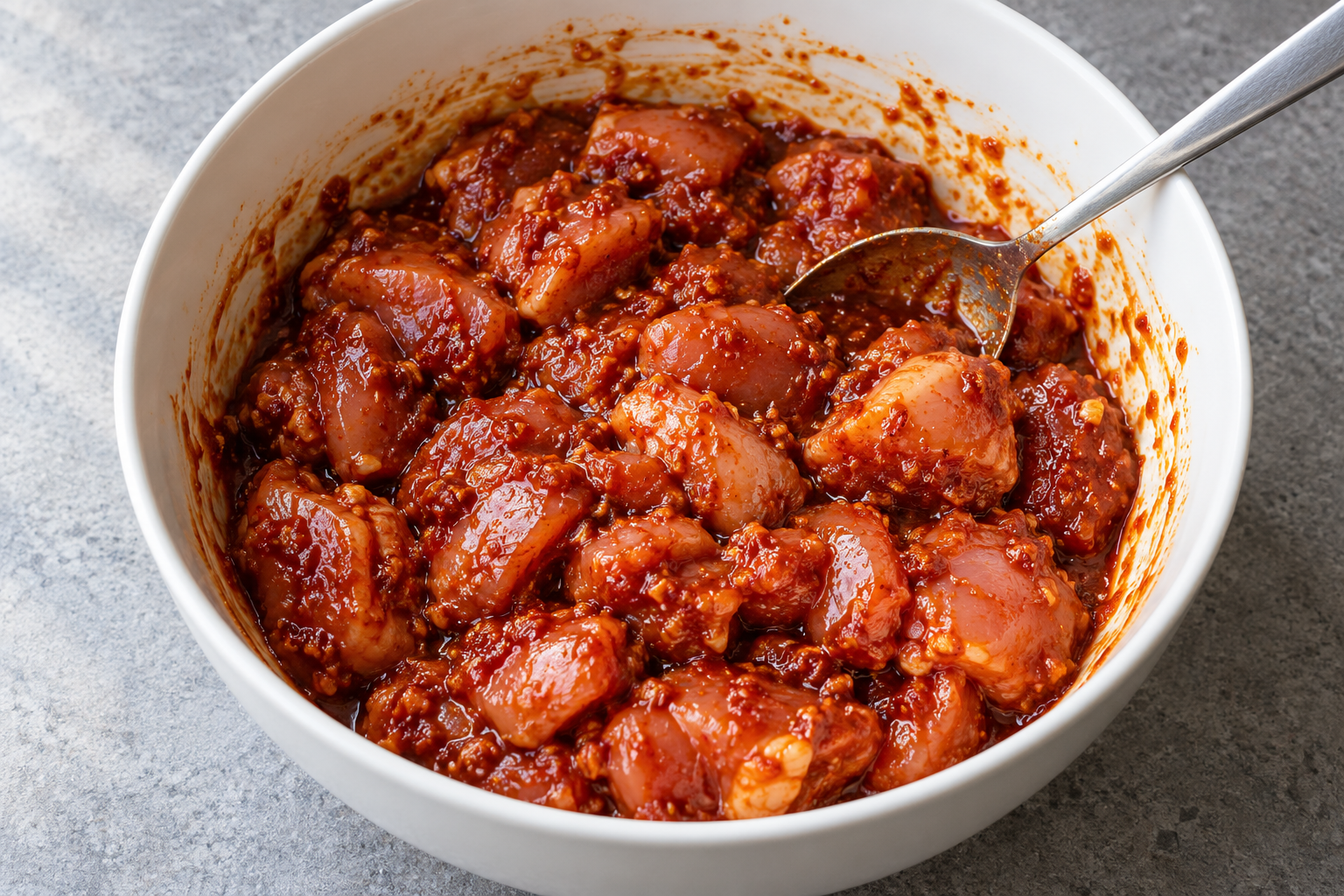
- Marinate. Mix the marinade ingredients and coat the chicken. Cover and refrigerate for 30 minutes. Do not taste marinade after it has touched raw chicken.
- Prepare. Follow the rice-cake package for thawing or soaking, then drain. Cut sweet potato thinly and evenly; chop cabbage and scallions. Use clean utensils after handling raw chicken.
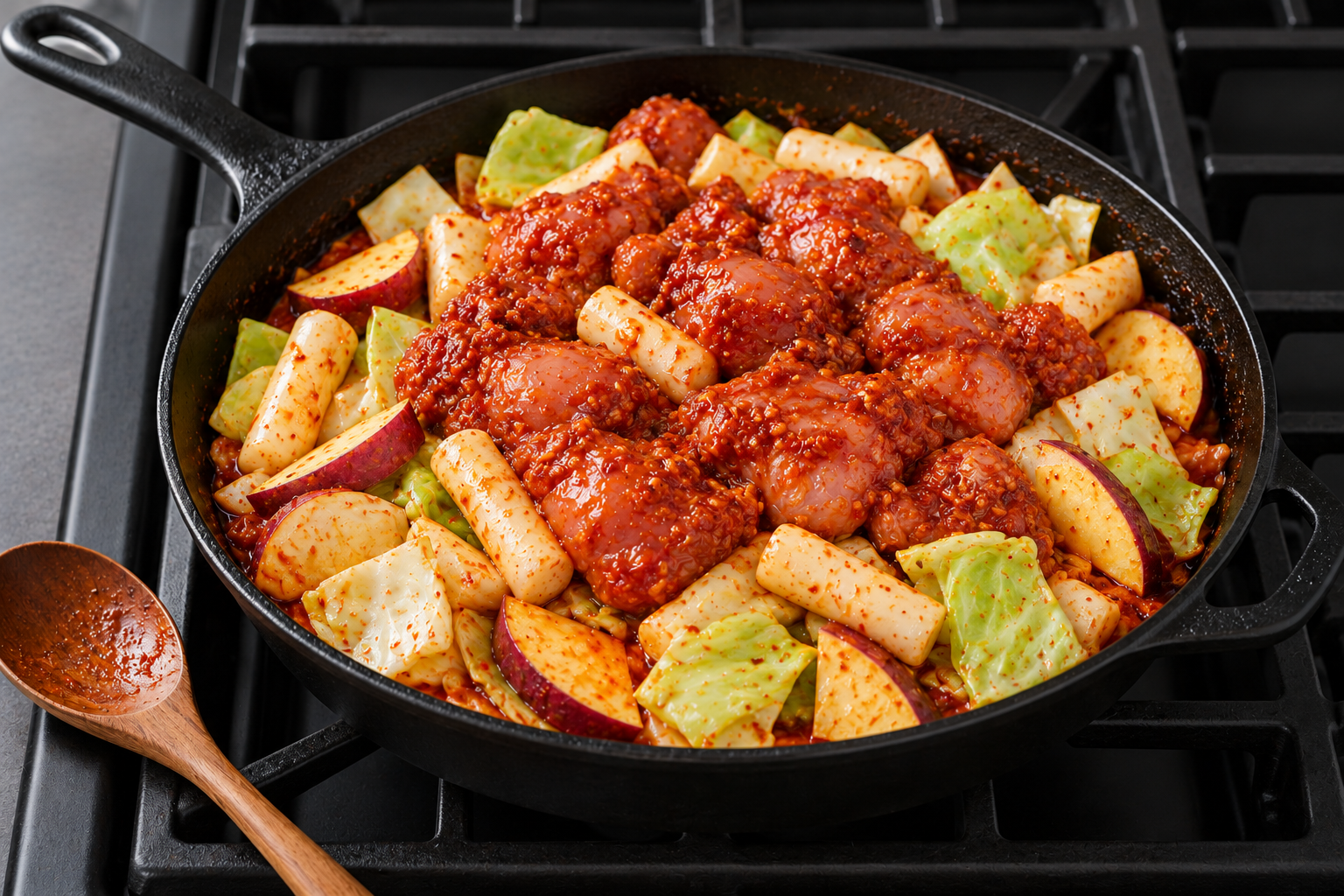
- Start the pan. Heat the neutral oil over medium-high heat. Add cabbage, sweet potato and rice cakes, then chicken and all its marinade. Add ¼ cup water and cover until the mixture begins to simmer.
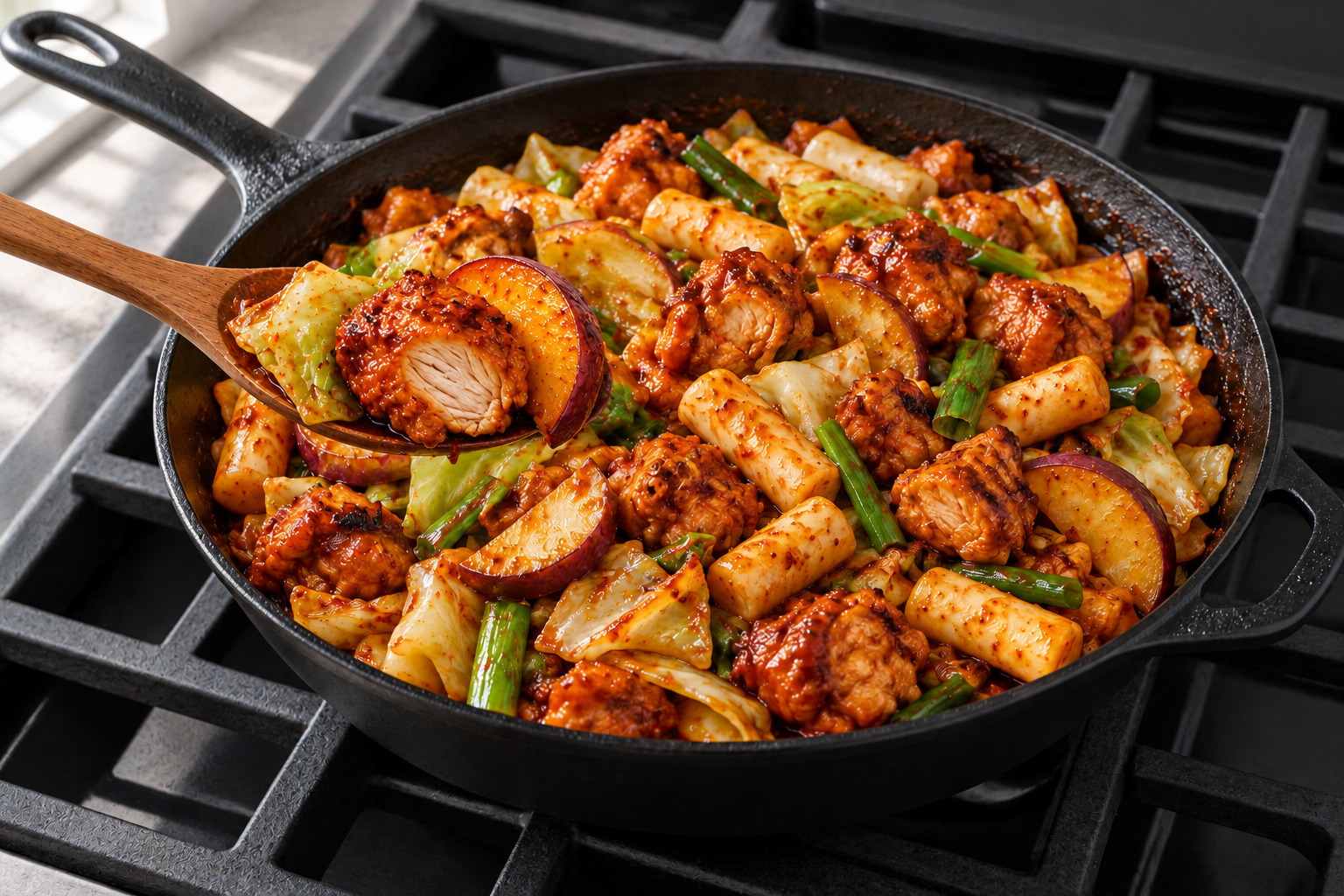
- Cook through. Reduce to medium, stirring regularly and turning the chicken. Add small splashes of water if the sauce catches. Add scallions as the vegetables soften. Continue until sweet potato and rice cakes are tender and every checked chicken piece reaches 165°F (74°C). Insert the thermometer into the thickest part of several large pieces, avoiding the pan; keep cooking if any reading is lower.
- Finish. Once the safe temperature is reached, uncover briefly if needed to reduce excess liquid. Serve with clean utensils. Do not use the raw-chicken bowl or spoon for serving unless washed thoroughly.
Shopping and substitutions
Korean sweet potato has a different texture from many orange US varieties; an orange or white-fleshed sweet potato is an author-supported alternative, but softening time may change. Look for gochujang, gochugaru and Korean curry powder in a Korean grocery; current stock has not been checked. This simplified version omits perilla leaves and cheese. Do not assume generic curry powder or a bottled hot sauce will taste the same.
Allergens: sesame, plus soy and often wheat in the sauce ingredients. Curry mixes can contain additional allergens, including milk or wheat. Check every label, including rice cakes; this is not a gluten-free or allergen-free recipe.
Storage and safety limits
Chill shallow portions within 2 hours (1 hour above 90°F/32°C); refrigerate at or below 40°F/4°C. Handling limits. Use within 3–4 days. Storage reference. Reheat throughout to 165°F/74°C. Temperature reference.
Read the shared kitchen-safety guide before cooking; the recipe-specific limits above still apply.
Sources and scope
- Hyosun, Korean Bapsang: ingredient framework, sweet-potato alternative and moisture adjustment.
- Sue Pressey, My Korean Kitchen: marinating and pan-cooking approach.
- Maangchi: covered cooking and staged heat reduction.
- CDC: chicken handling and thermometer use; FDA: allergen labels.
Sources checked October 26, 2026 (UTC). This adaptation uses its own wording and changes some amounts and optional ingredients. No hands-on cooking test, verified total time or nutrition analysis has been performed. AI illustrations demonstrate stages, not a measured batch or safety test.
QUESTIONS & EXPERIENCES
Comments 0
Share a question or experience about this guide, then keep the conversation going with replies.
No published comments yet. Be the first to share a question or experience.