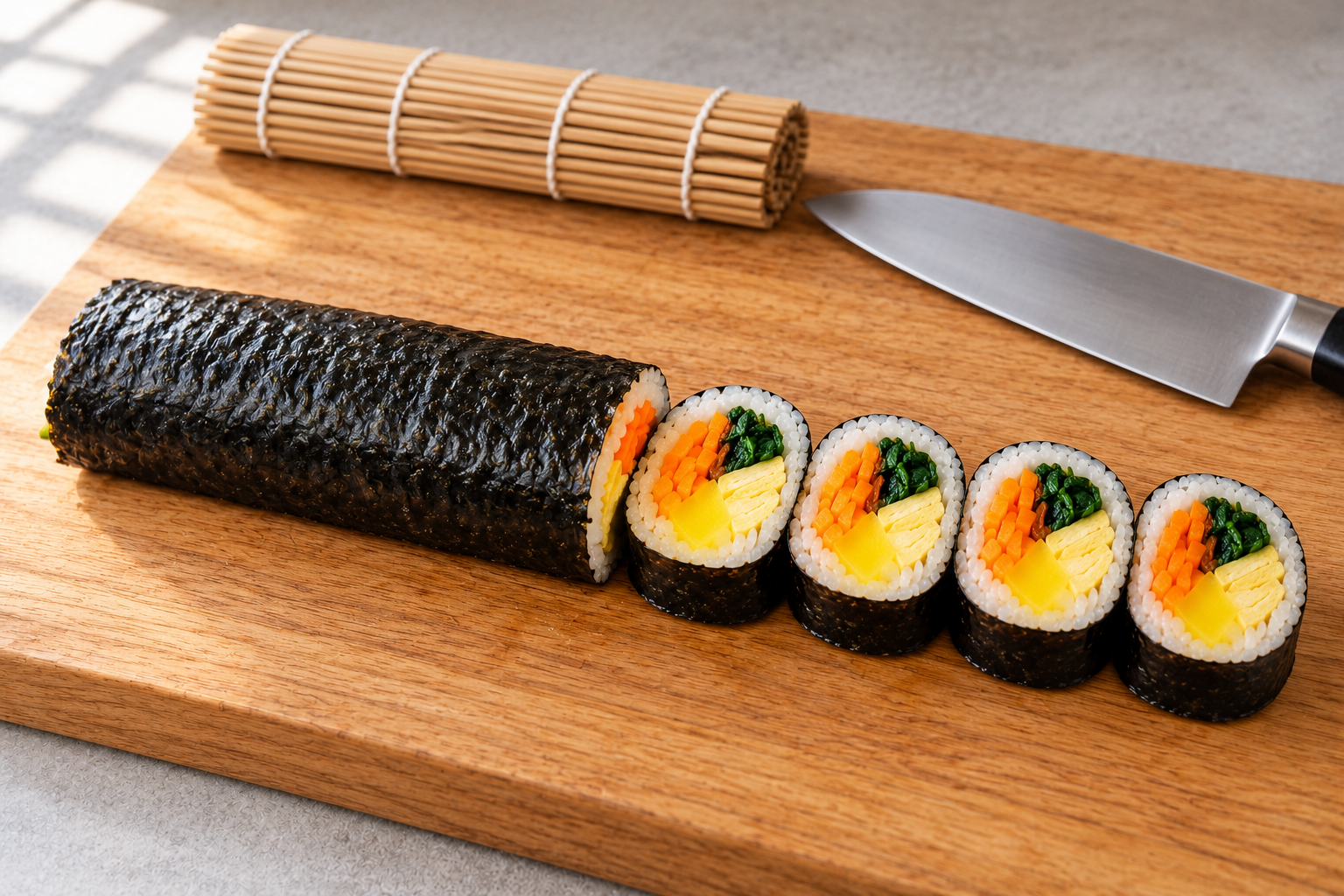
Roll sesame-seasoned rice, egg, spinach, carrot and pickled radish in full-size seaweed sheets. This meatless kimbap (also spelled gimbap, 김밥) keeps the filling list short. It contains egg, so it is not vegan. This independently written adaptation is based on published recipes; we have not cooked or taste-tested it.
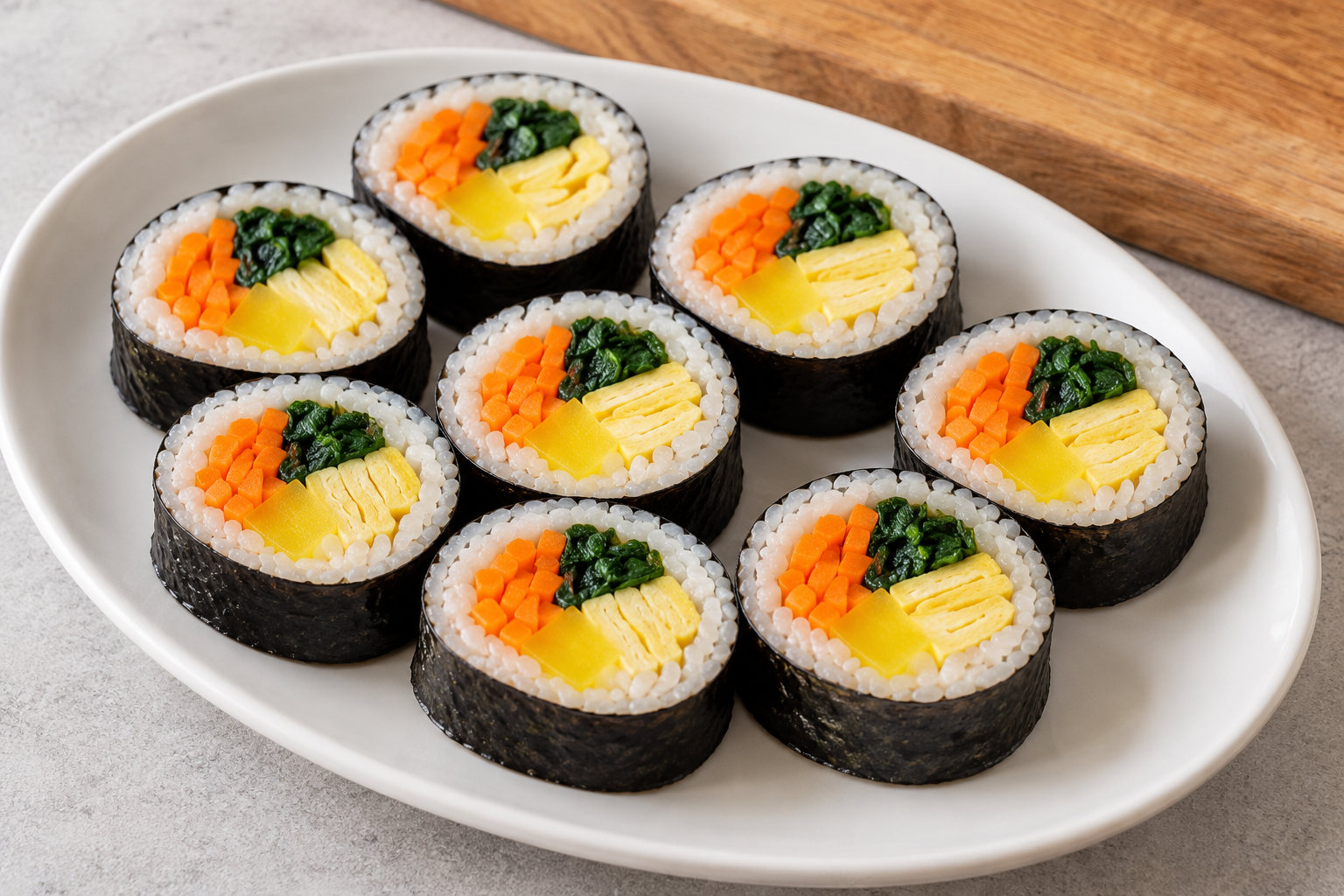
Before you start
Yield: 4 rolls. Have a bamboo rolling mat, nonstick skillet, saucepan, sharp knife and clean board ready. Prepare the fillings before the rice so assembly does not require a long room-temperature wait. Cook short-grain rice according to its package; the ingredient amount below is measured after cooking. No fixed preparation or total time has been verified.
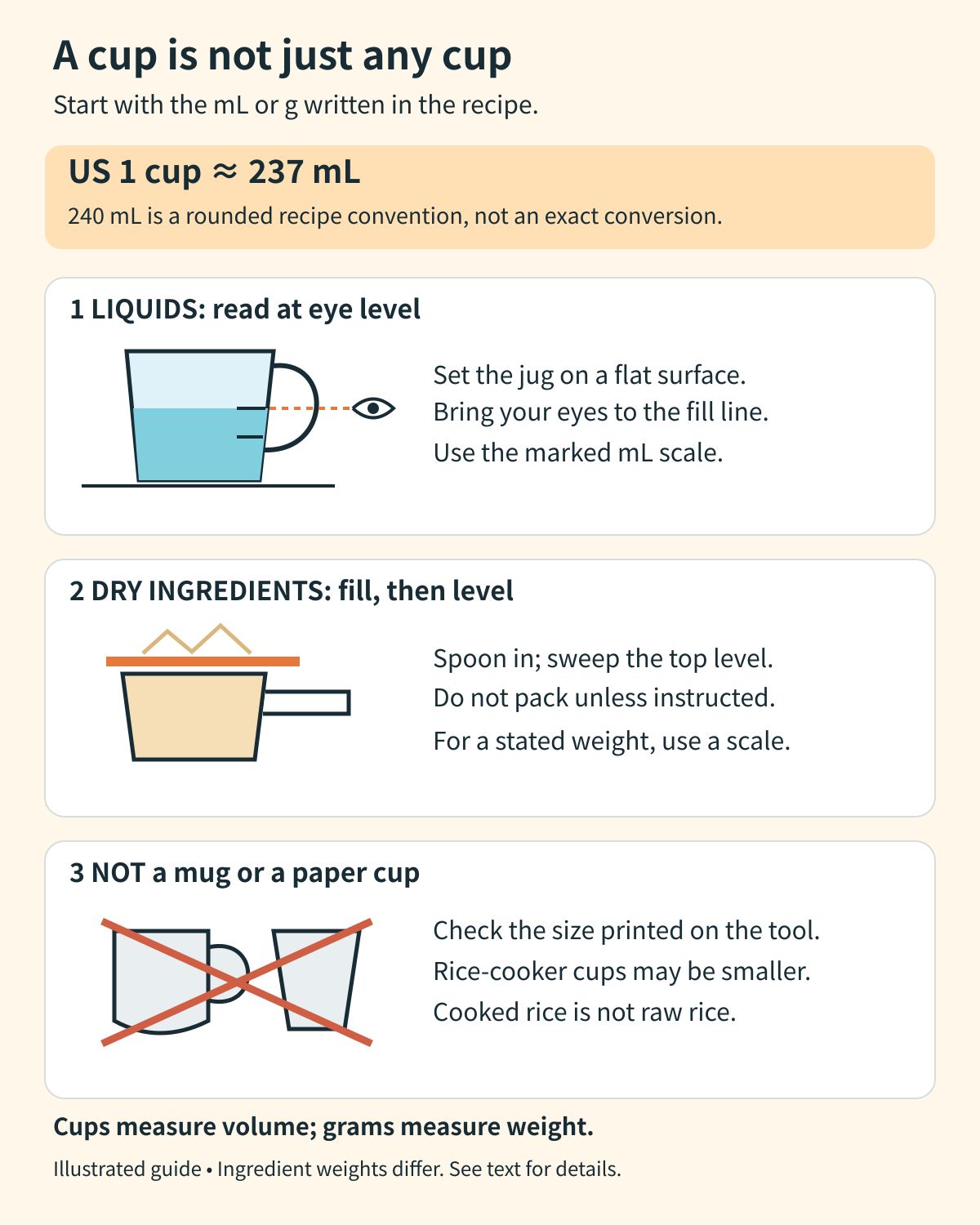
Weights are rounded. Spoon/cup equivalents are volumes, not weights: 1 tablespoon ≈ 15 mL; 1 teaspoon ≈ 5 mL; 1 US cup ≈ 237 mL (rounded to 240 mL in this recipe).
Which measuring cup?
Use the stated mL or g when supplied. See our visual measuring guide and unit notes.
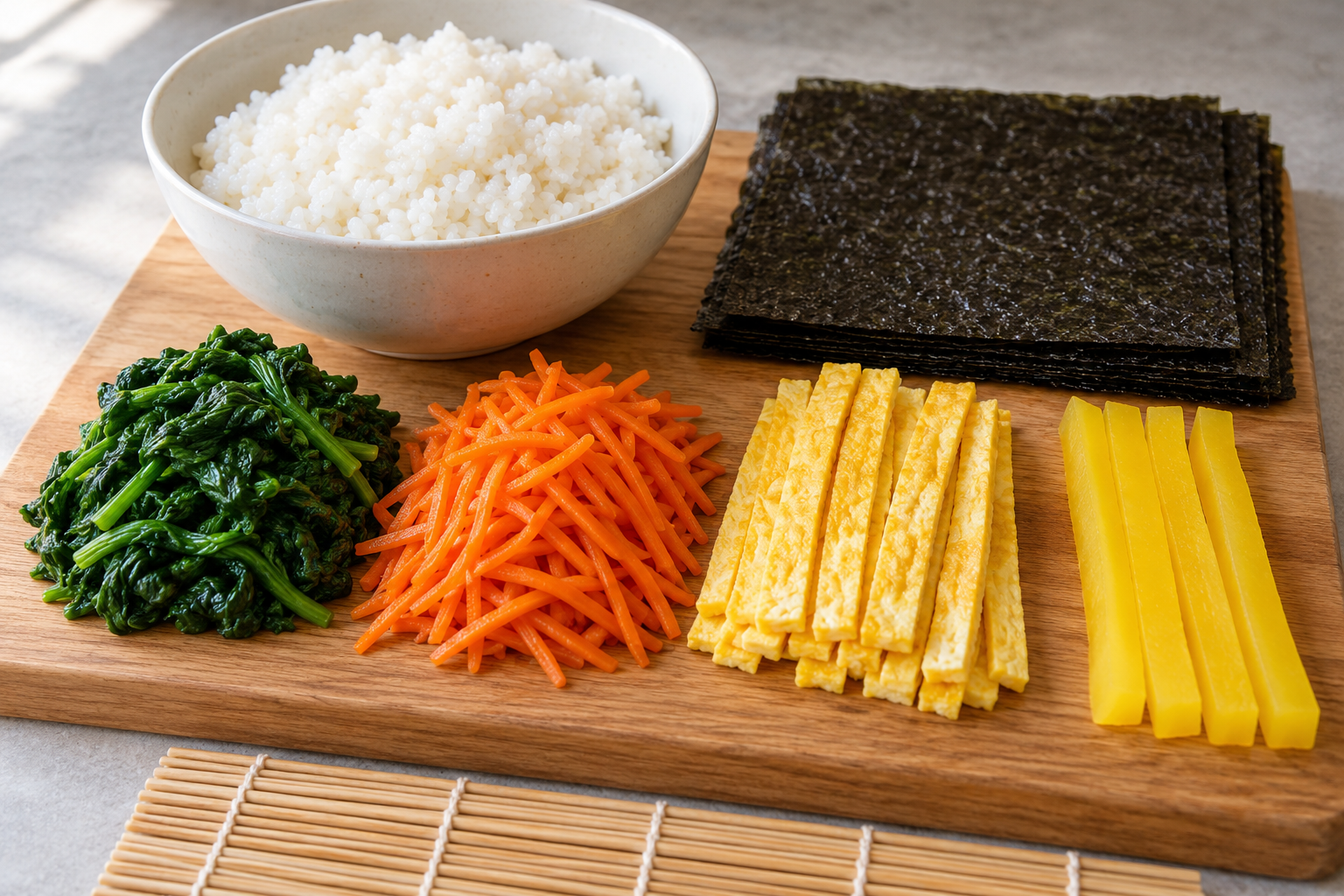
Ingredients
- 4 full-size plain gim or sushi-nori sheets
- 3 cups cooked short-grain white rice (720 mL by volume)
- 8 oz (225 g) fresh spinach
- 4.2 oz (120 g) carrot, cut into matchsticks
- 2 large eggs, beaten
- 4 long danmuji pickled-radish strips, drained
- 2 tablespoons (30 mL) toasted sesame oil, divided
- 2 teaspoons (10 mL) neutral oil, divided
- ½ teaspoon (2.5 mL) fine salt, divided; use less if preferred
Method
- Spinach. Rinse, blanch in boiling water until wilted, then cool under cold running water. Squeeze thoroughly. Toss with 1 teaspoon sesame oil and a small portion of the salt.
- Carrot and egg. Soften the carrots in 1 teaspoon neutral oil; set aside. Use the remaining neutral oil to cook the beaten eggs into an omelet. Cook both sides completely, without runny areas; egg dishes should reach 160°F (71°C). Slice into long strips. Divide a little salt between carrot and egg.
- Rice. Fold 1 tablespoon sesame oil and ¼ teaspoon salt into the freshly cooked rice. Let excessive steam escape briefly; do not leave it standing for hours. Keep cooked fillings separate from utensils used for raw egg.
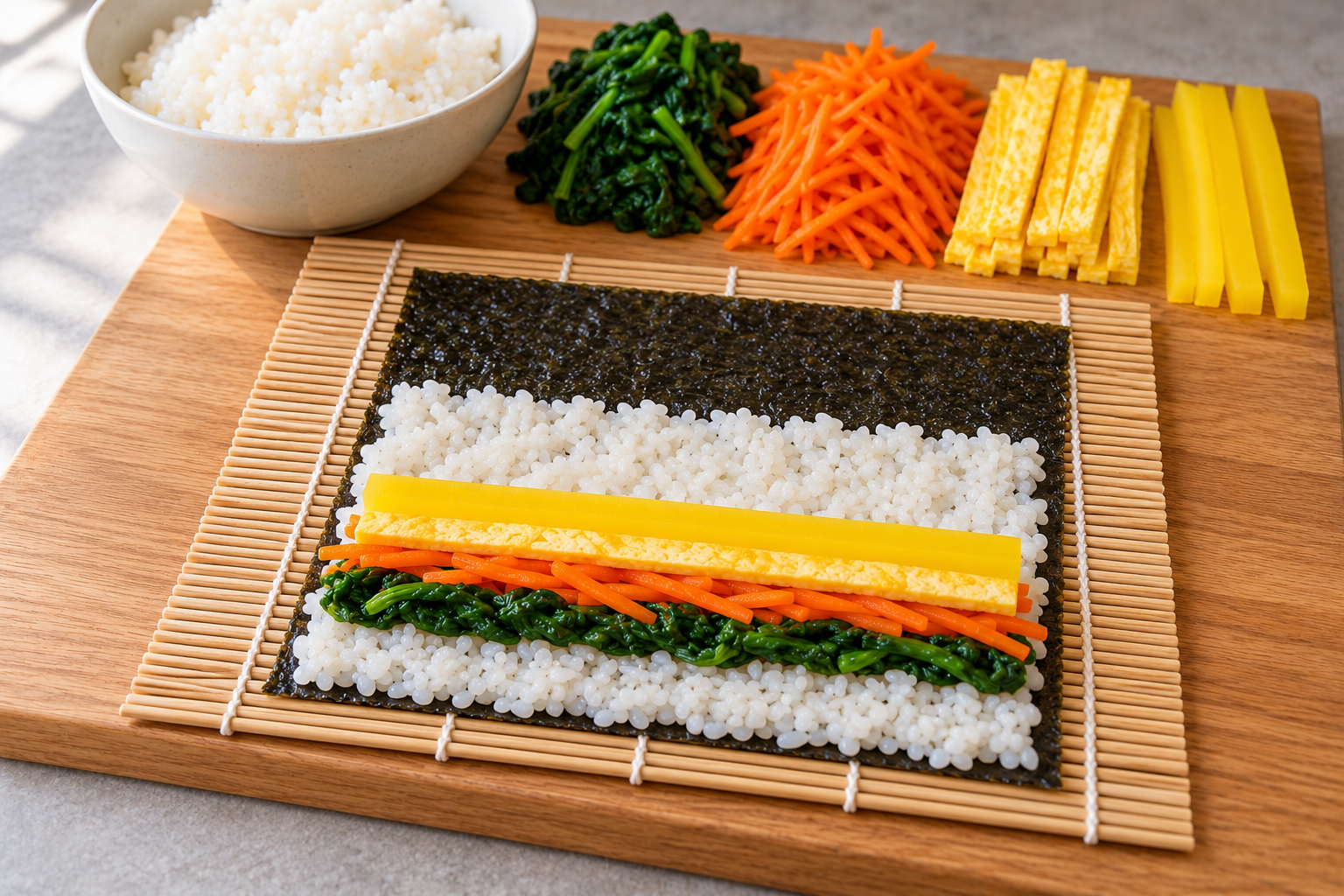
- Fill. Lay one seaweed sheet shiny side down on the mat. Spread ¾ cup (180 mL) rice over it, leaving about 2 inches (5 cm) bare at the far edge. Arrange one-quarter of each filling across the lower middle, including one radish strip.
- Roll. Lift the near edge with the mat and wrap it over the fillings. Apply even, gentle pressure while rolling forward; pull the mat clear rather than trapping it inside. Rest seam-side down. Repeat for four rolls.
- Slice. Lightly brush with the remaining 2 teaspoons sesame oil. Slice with a sharp knife, wiping away sticky rice between cuts. Serve promptly or chill as described below.
Shopping and substitutions
Choose full-size unseasoned nori sheets sold for rolling, not small seasoned seaweed snacks. Look for danmuji in a Korean grocery’s refrigerated section; local availability has not been checked. The filling can be varied, but this illustrated version contains only egg, spinach, carrot and radish. Keep fillings dry and avoid overfilling.
Allergens: egg and sesame. Read seaweed, pickled-radish and oil labels for additional ingredients and cross-contact warnings. No gluten-free or allergen-free claim is made.
Storage and safety limits
Rice and egg rolls are perishable, even though they are served without reheating. For this guide, follow the UK Food Standards Agency’s conservative rice guidance: cool and refrigerate promptly, ideally within 1 hour, and eat within 24 hours. Store at 40°F (4°C) or below. This is a conservative recipe recommendation, not a claim about a special US kimbap rule.
The US maximum room-temperature window for perishable food is 2 hours, or 1 hour above 90°F (32°C); discard food exceeding it. Carry rolls chilled for a packed lunch. If reheating, bring the entire portion to 165°F (74°C), and do not reheat rice more than once. Reheating is not a fix for poor storage. See FDA safe handling and FoodSafety.gov temperatures.
Read the shared kitchen-safety guide before cooking; the recipe-specific limits above still apply.
Sources and scope
- Hyosun, Korean Bapsang: rice portions, ingredient framework and dry-filling guidance.
- Maangchi: seaweed placement, rolling and slicing technique.
- Sue Pressey, My Korean Kitchen: carrot quantity and cooked-filling preparation.
- FDA: allergen-label guidance.
Sources checked October 26, 2026 (UTC). Meat, seafood and burdock fillings from the reference recipes are omitted. Quantities have been adapted; no hands-on test or nutrition analysis has been performed. All images are AI stage examples, not measured yield or proof of a tested result.
QUESTIONS & EXPERIENCES
Comments 0
Share a question or experience about this guide, then keep the conversation going with replies.
No published comments yet. Be the first to share a question or experience.