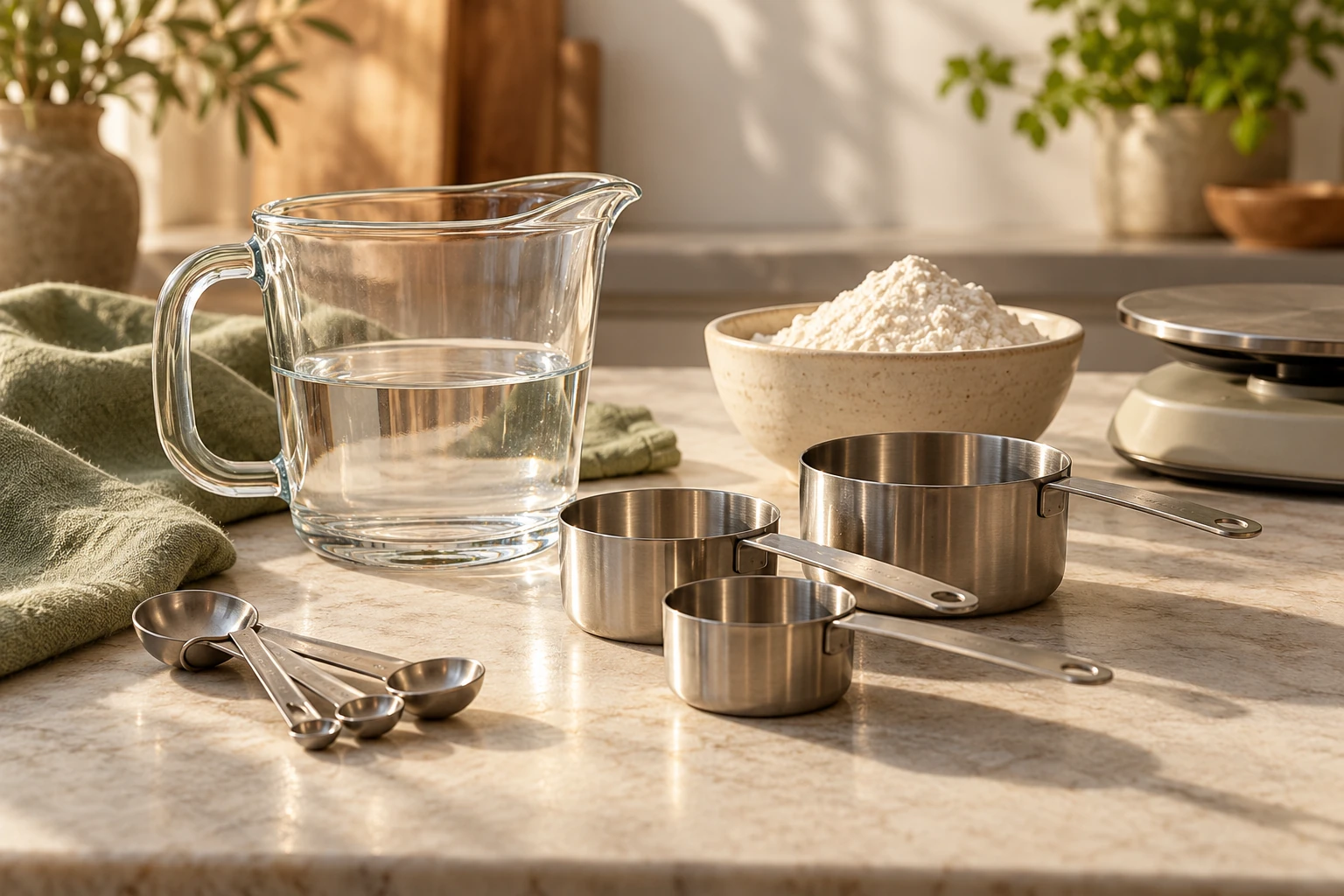
Use measuring tools, not a random drinking cup. For these recipes, follow the listed mL or g where supplied. Keep the ingredient state: cooked rice is not uncooked rice.
Read the units
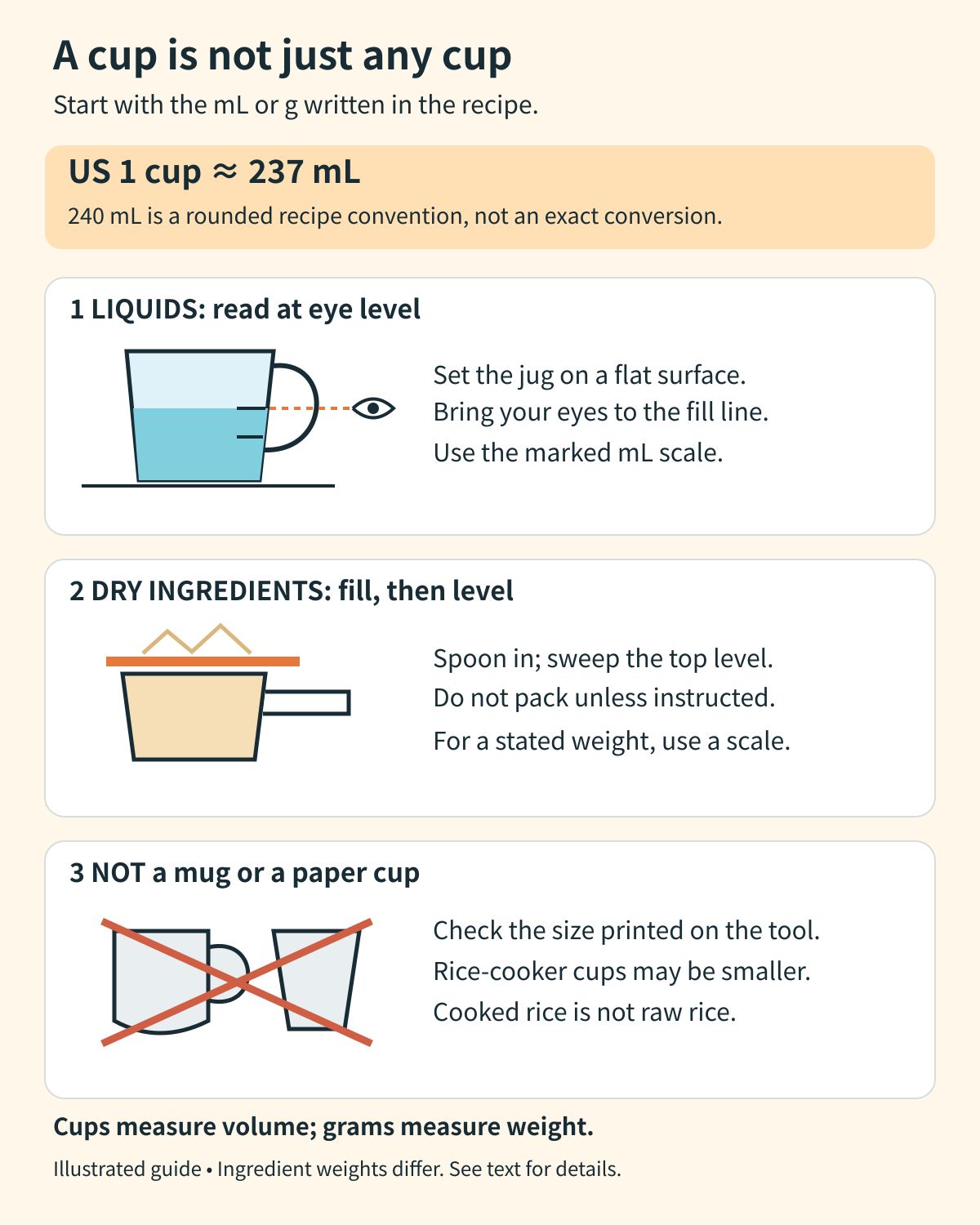
A US customary cup is approximately 237 mL. Some recipes here round a cup to 240 mL; that is a convenient approximation, not an exact conversion. Follow each recipe’s stated quantities rather than recalculating them from this diagram. Do not substitute a tool marked 250 mL or a smaller rice-cooker cup. Check its markings; Zojirushi describes its rice cup as about three-quarters of a US measuring cup.
Tbsp means tablespoon and tsp means teaspoon. US spoon volumes are approximately 14.8 mL and 4.93 mL; recipe values commonly round these to 15 mL and 5 mL. Use measuring spoons, not dining cutlery.
Technique and exceptions
For liquids, set the jug flat and read the line at eye level. For flour and similar dry ingredients, spoon into a dry measuring cup and level the rim without packing unless directed. Follow ingredient-specific instructions, especially packed ingredients.
mL is volume; g is mass. A cup of flour, salt and cooked rice does not have one shared gram weight. No new cup-to-gram ingredient conversions are asserted here. Keep the stated salt type and complete fermentation recipe unchanged.
Sources
Checked 27 October 2026 (Korea). NIST: household units; Illinois Extension: measuring ingredients; Zojirushi: rice-cooker measuring cup.
Original instructional diagrams, not photos of cooking tests. These recipes have not been kitchen-tested.
Kitchen safety
Read the recipe’s own cooking and storage limits too. This guide is not a kitchen test or an assurance that a particular batch is safe.
Before handling food
Wash hands and utensils. Separate raw meat and eggs from ready-to-eat food; use clean serving utensils. FoodSafety.gov handling guidance.
Cooking checks
Use a clean food thermometer, not a photograph or meat color. Check thick pieces without touching the pan, following your thermometer’s sensing-depth directions. CDC guidance; Maryland Extension thermometer placement guide. Follow the temperature and rest time stated in your recipe. Temperature chart.
Cool, store and reheat
Divide leftovers into shallow portions for prompt chilling. Do not leave a large pot on the counter to cool. Follow the recipe’s shorter storage advice where given. CDC chilling guidance. Food left out beyond its safe window should be discarded, not rescued by reheating. Keep packaged ingredients according to their labels. FDA handling guidance.
Images and labels
AI illustrations cannot establish temperature, safe fermentation, quantities or allergen status. Check each package’s ingredients; shared equipment can introduce additional allergens. FDA allergen guidance.
Official sources checked October 27, 2026 (KST).
QUESTIONS & EXPERIENCES
Comments 0
Share a question or experience about this guide, then keep the conversation going with replies.
No published comments yet. Be the first to share a question or experience.