This pajeon uses grocery-store scallions and a short flour batter—no eggs or seafood. It is an independently written adaptation, not a pancake we have cooked or taste-tested.
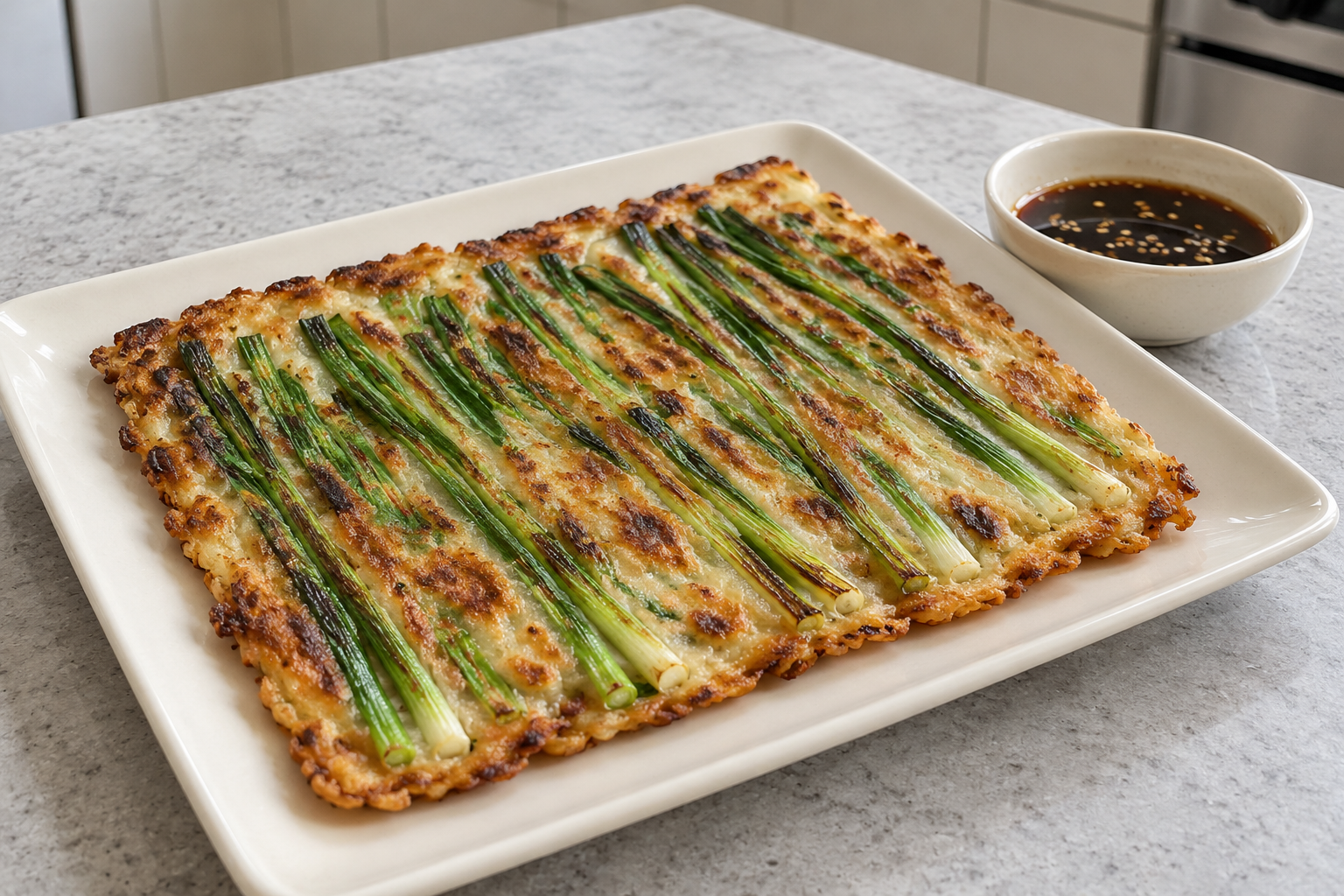
Before you start
Makes one pancake. Use a 12-inch (30-cm) nonstick skillet, a bowl, whisk, wide heatproof spatula and a thin-tip food thermometer. Start with moderate heat and adjust to your pan; this heat-setting choice has not been kitchen-tested. Total preparation and cooking time is not claimed.
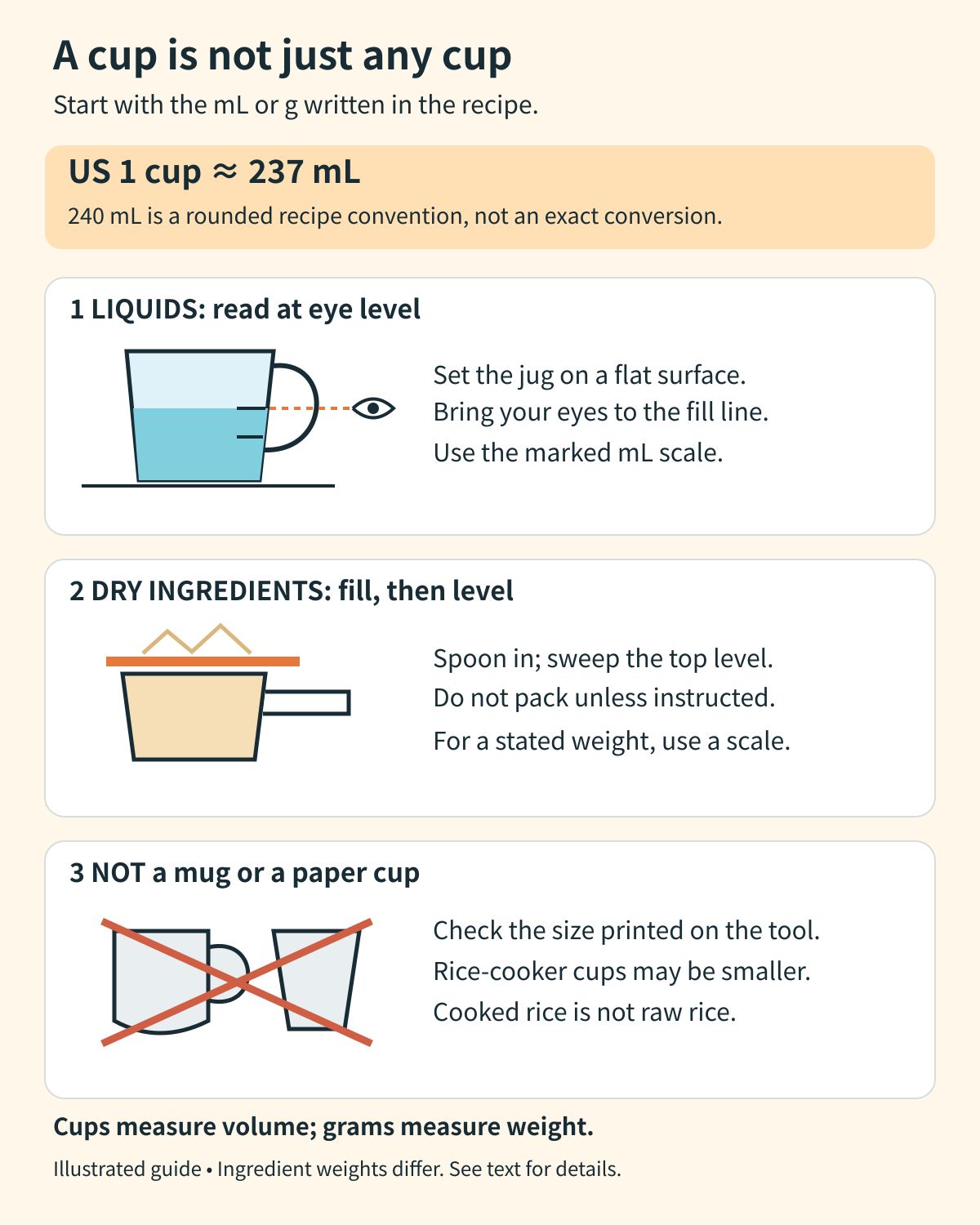
Tbsp = US tablespoon; tsp = US teaspoon. Metric volumes are rounded (US cup ≈ 237 mL; Tbsp ≈ 14.8 mL; tsp ≈ 4.93 mL). The flour conversion is volume, not an asserted weight.
Which measuring cup?
Use the stated mL or g when supplied. See our visual measuring guide and unit notes.
Ingredients
- Scallions: about 10 stalks, trimmed
- All-purpose flour: ½ US cup (about 120 mL by volume)
- Water: ½ US cup (about 120 mL)
- Doenjang (Korean soybean paste): 1 tsp (5 mL)
- Sugar: ½ tsp (2.5 mL)
- Neutral vegetable oil: 3 Tbsp (45 mL)
Dipping sauce
- Soy sauce: 2 Tbsp (30 mL)
- Unseasoned rice vinegar: 1 Tbsp (15 mL)
- Sugar: 1 tsp (5 mL)
- Toasted sesame seeds: 1 tsp (5 mL)
Method
- Prepare scallions. Wash and drain scallions; cut into 5-inch (13-cm) lengths.
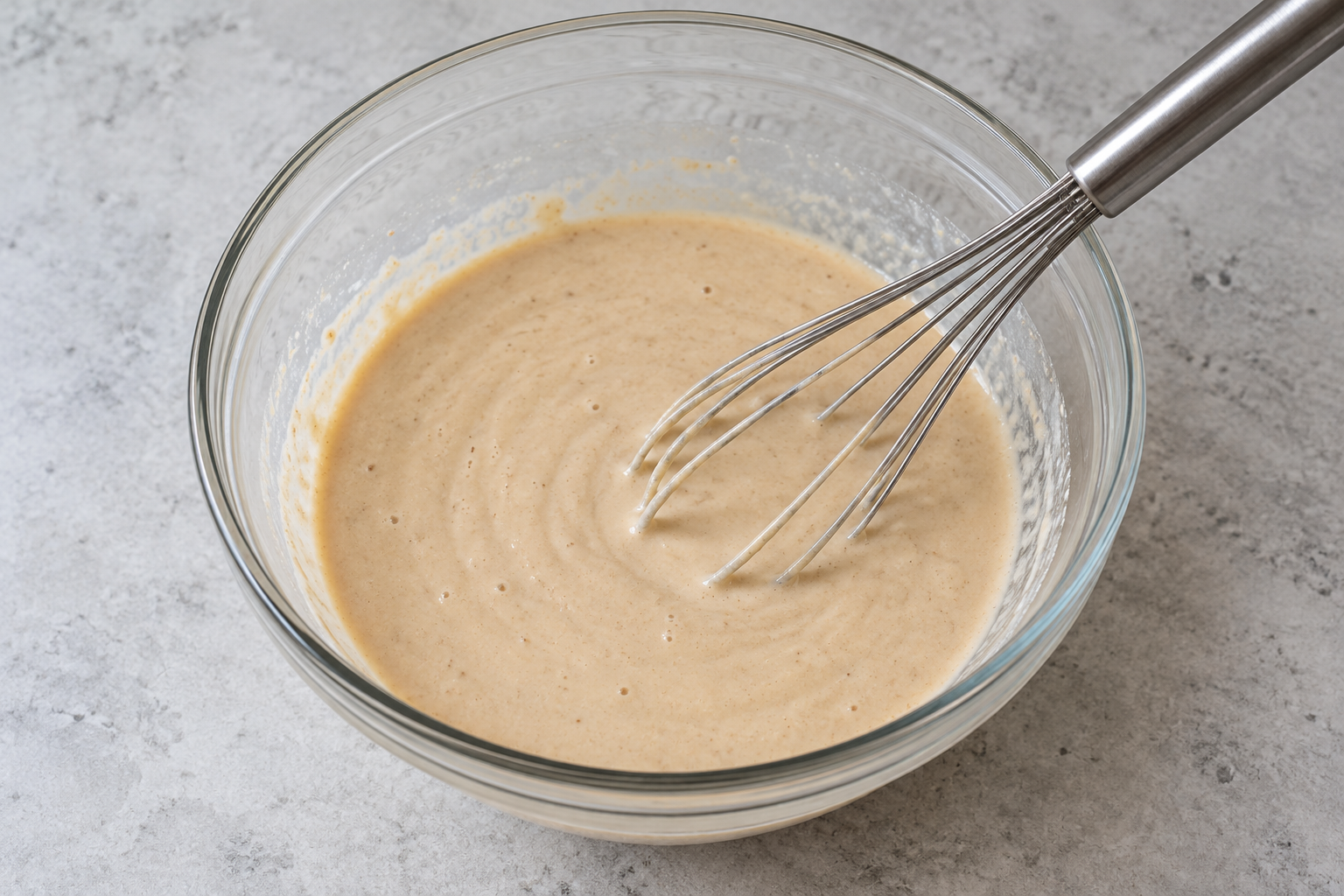
- Make batter. Whisk flour, water, doenjang and sugar until smooth. Do not taste uncooked batter.
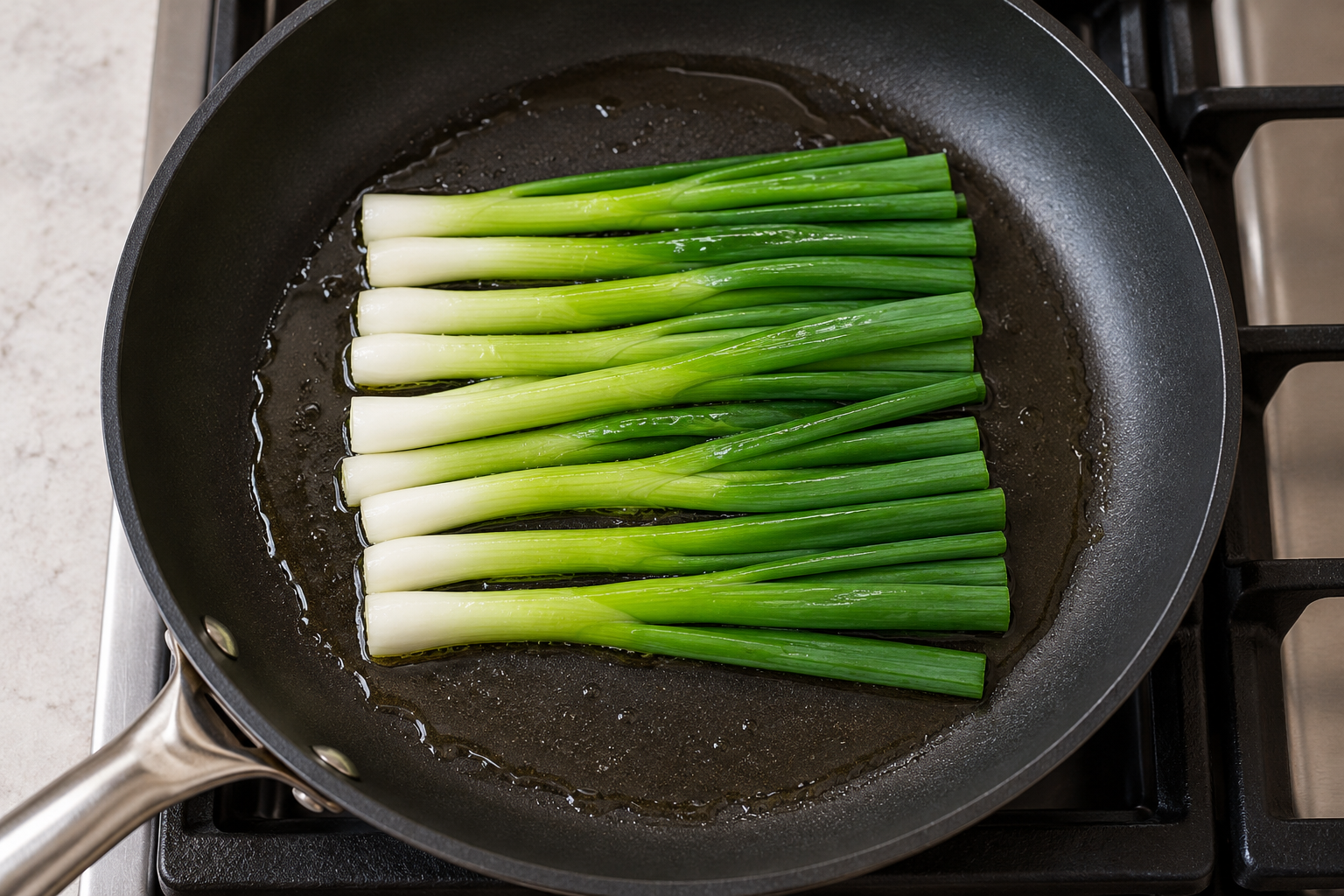
- Arrange. Heat a nonstick skillet; add oil. Arrange scallions parallel in a 6-by-7-inch (15-by-18-cm) rectangle. Lower scallions carefully to avoid oil splashes.
- Cook both sides. Pour batter evenly over scallions. Press gently with a spatula. Cook until golden underneath; flip. Brown the second side, turn again, and cook another minute. Reduce heat if the surface browns before the middle cooks.
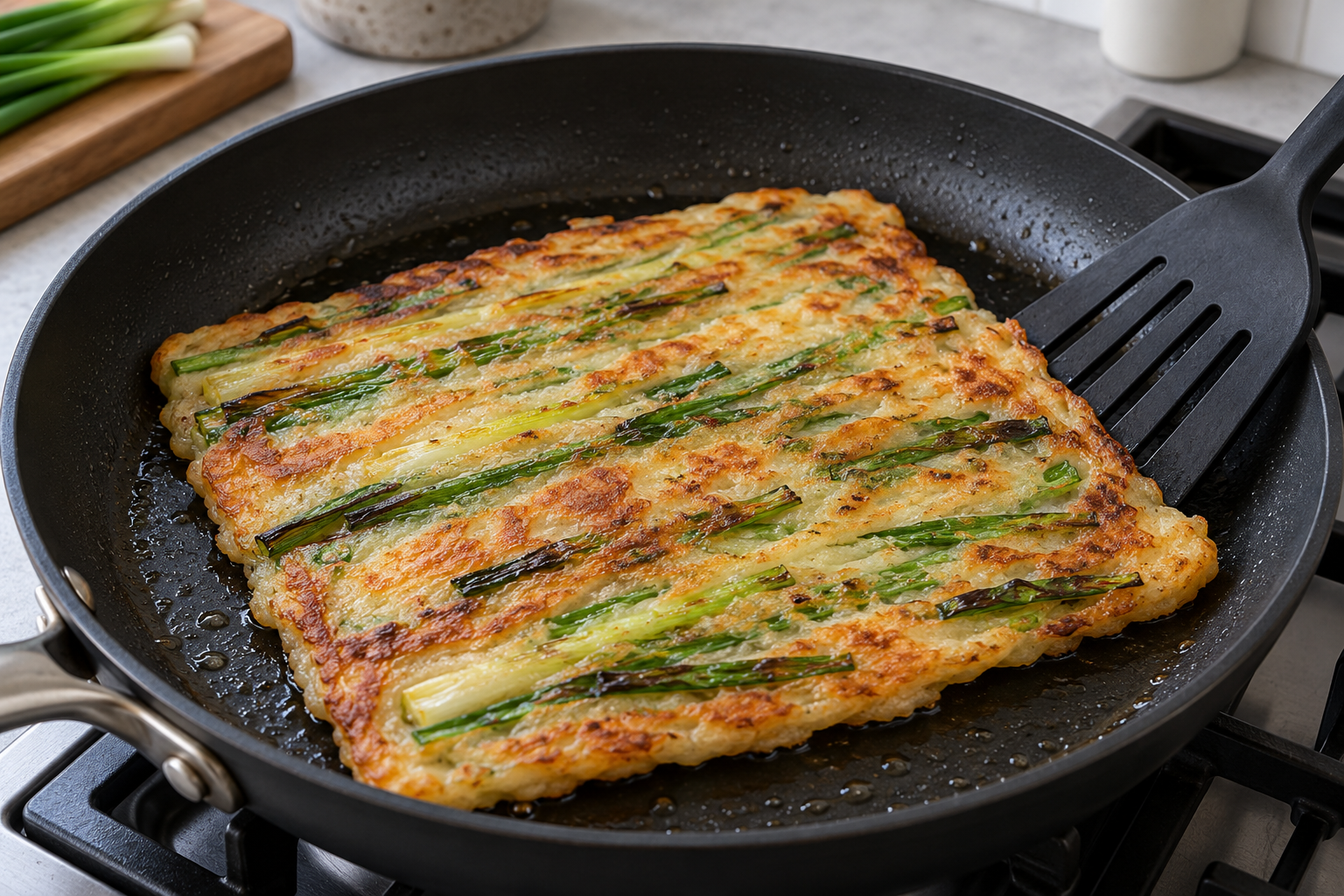
- Check the center. Continue cooking until the middle reaches at least 165°F (74°C), measured sideways with a suitable thin-tip thermometer without touching the pan; follow the probe’s insertion-depth instructions and check more than one place. The batter should be fully set, with no wet pockets. This recipe adopts the British Columbia Centre for Disease Control’s minimum for foods containing raw flour; it is not presented as a US pancake-specific rule.
- Serve. Stir sauce ingredients together; serve separately. Transfer the cooked pancake with a clean utensil to a clean plate and serve promptly.
Shopping and substitutions
Use ordinary grocery scallions; do not forage for this recipe. Choose plain all-purpose flour, not a sweetened pancake mix. Doenjang is the named soybean paste, not gochujang. This recipe does not provide a tested rice-flour or gluten-free replacement ratio. Unseasoned vinegar avoids introducing the extra sugar and salt found in seasoned products.
Allergens: wheat and soy; the dipping sauce also contains sesame. Check doenjang, soy sauce and every other label, including cross-contact warnings. No eggs or seafood are added, but this is not a certified allergen-free recipe.
Flour safety and leftovers
Raw flour can carry harmful bacteria even when there is no egg. Do not taste batter or let children play with it; keep raw-flour utensils separate from cooked food and wash hands, bowls and surfaces after handling it. See FDA flour safety and CDC raw-batter guidance.
Chill shallow portions within 2 hours (1 hour above 90°F/32°C); refrigerate at or below 40°F/4°C. Handling limits. Use within 3–4 days. Storage reference. Reheat throughout to 165°F/74°C. Temperature reference.
Read the shared kitchen-safety guide; the recipe-specific limits above still apply.
Sources and scope
Based on Maangchi’s pajeon; no optional seafood. Dipping-sauce onion and chile are omitted. All-purpose flour and unseasoned rice vinegar are explicit editorial product choices; no alternative batter ratios are combined.
Sources checked October 26, 2026 (UTC). No hands-on test, exact total-time promise, nutrition analysis or health benefit is claimed. All four illustrations are AI-generated.
QUESTIONS & EXPERIENCES
Comments 0
Share a question or experience about this guide, then keep the conversation going with replies.
No published comments yet. Be the first to share a question or experience.