A four-bowl bibimbap plan with supermarket ingredients and an ordinary skillet. This independently written, source-based adaptation has not been cooked or taste-tested by this publication. It is not a sizzling stone-bowl recipe.

Before you start
Have a saucepan, strainer, 10–12-inch (25–30-cm) nonstick skillet, clean bowls, and a suitable thin-tip food thermometer. Total preparation and cooking time have not been measured.
Tbsp = US tablespoon; tsp = US teaspoon. Metric volumes are rounded kitchen equivalents (1 Tbsp ≈ 14.8 mL; 1 tsp ≈ 4.93 mL). Dry spoon measures are volumes, not grams.
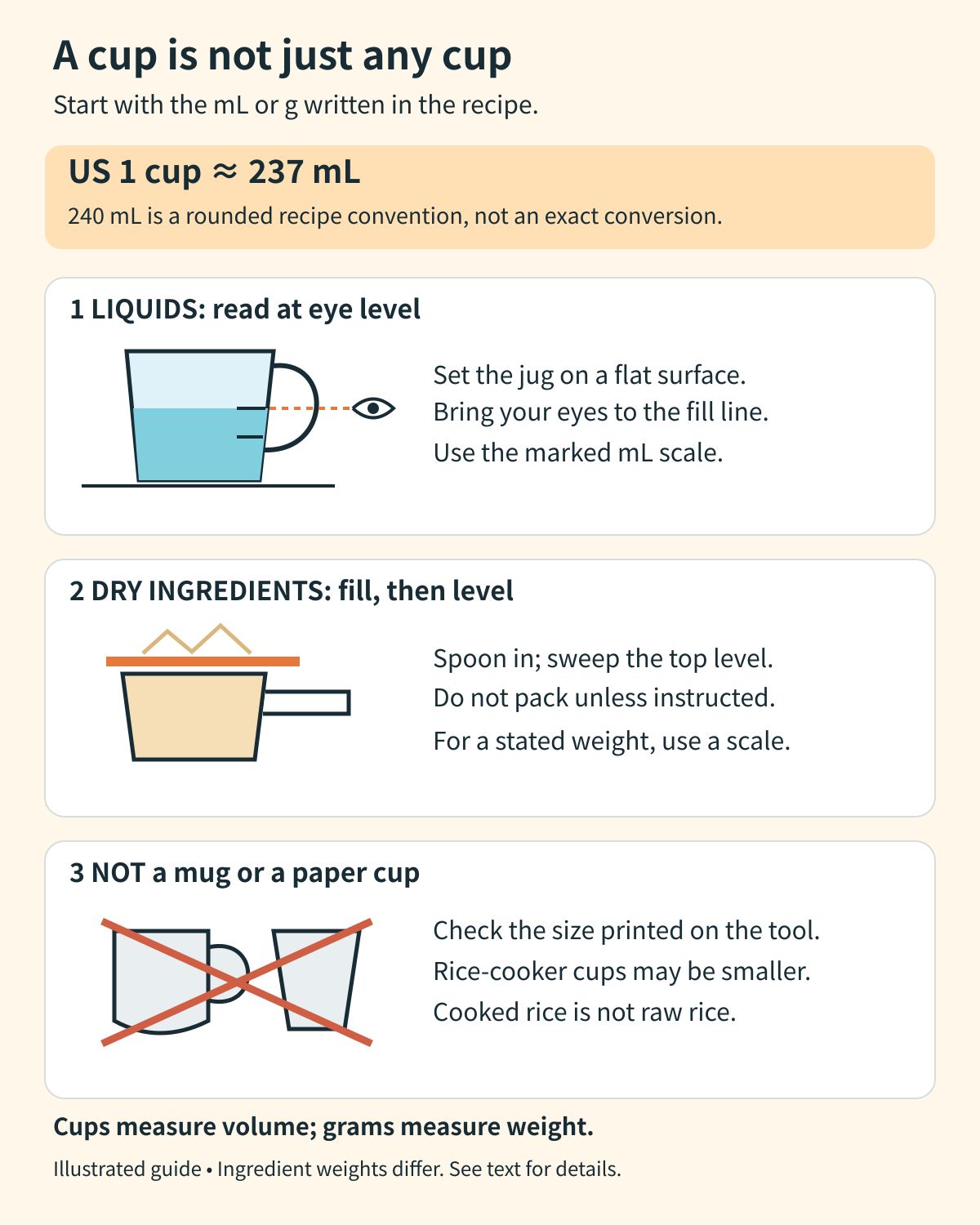
Which measuring cup?
Use the stated mL or g when supplied. See our visual measuring guide and unit notes.
Ingredients
Editorial serving and pan-oil allocation
- 4 US cups hot cooked short-grain rice (about 950 mL by volume); cook according to package instructions before measuring.
- 2 Tbsp (30 mL) neutral oil: 1 tsp each for carrots, mushrooms and beef; remaining 1 Tbsp for eggs.
These serving/oil amounts are explicit choices for this untested adaptation. A US cup is about 237 mL, not the smaller rice-cooker cup.
Beef and its seasonings
- Ground beef: 8 oz (227 g)
- Soy sauce: 1½ Tbsp (22 mL)
- Sugar, sesame oil, rice wine: 2 tsp (10 mL) each
- Minced garlic: 1 tsp (5 mL)
- Chopped scallion: 1 Tbsp (15 mL)
- Pepper: pinch
Vegetables and eggs
- Spinach: 8 oz (227 g)
- Carrots: 5 oz (142 g), julienned
- Cremini mushrooms: 4 oz (113 g), sliced
- For spinach: garlic, sesame seeds, salt—½ tsp (2.5 mL) each; sesame oil—1 tsp (5 mL); scallion—1 Tbsp (15 mL)
- Carrot/mushroom salt: ¼ tsp (1.2 mL) each
- Eggs: 4
Sauce
- Gochujang: 4 Tbsp (60 mL)
- Sauce sugar: 2 tsp (10 mL)
- Sauce sesame oil, water: 1 Tbsp (15 mL) each
Method
- Prepare safely. Wash produce; do not rinse beef. Keep raw beef, eggs and their utensils away from cooked food. Combine beef with its seasonings; cover and refrigerate at 40°F (4°C) or colder for 20 minutes.
- Sauce. Stir its ingredients together in a clean bowl.

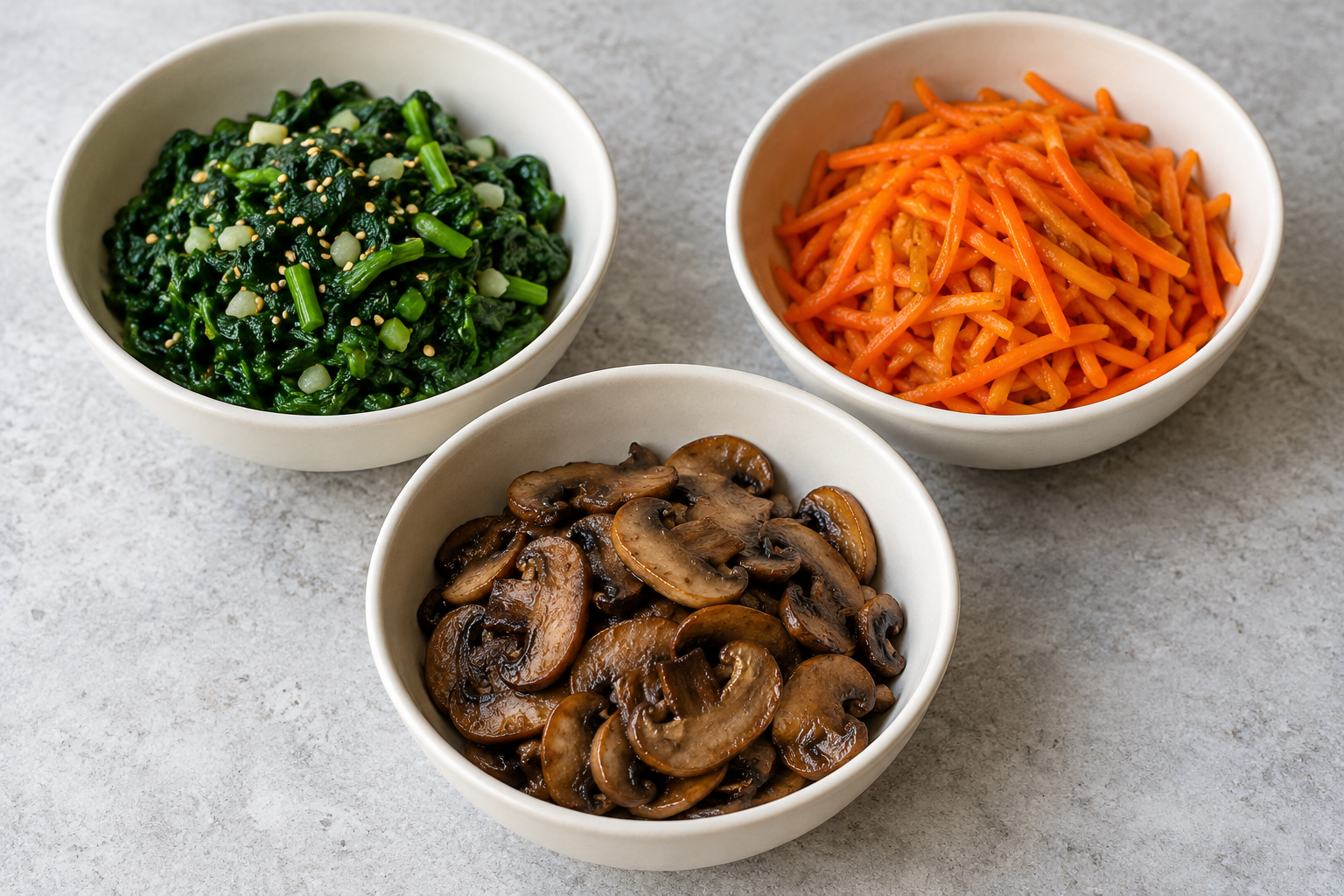
- Spinach. Boil until wilted, drain, cool under cold water, squeeze and chop. Mix with its listed seasonings, using minced garlic and chopped scallion.
- Carrots and mushrooms. Sauté separately over medium-high heat with their allocated oil and salt until tender; put each in a clean bowl.
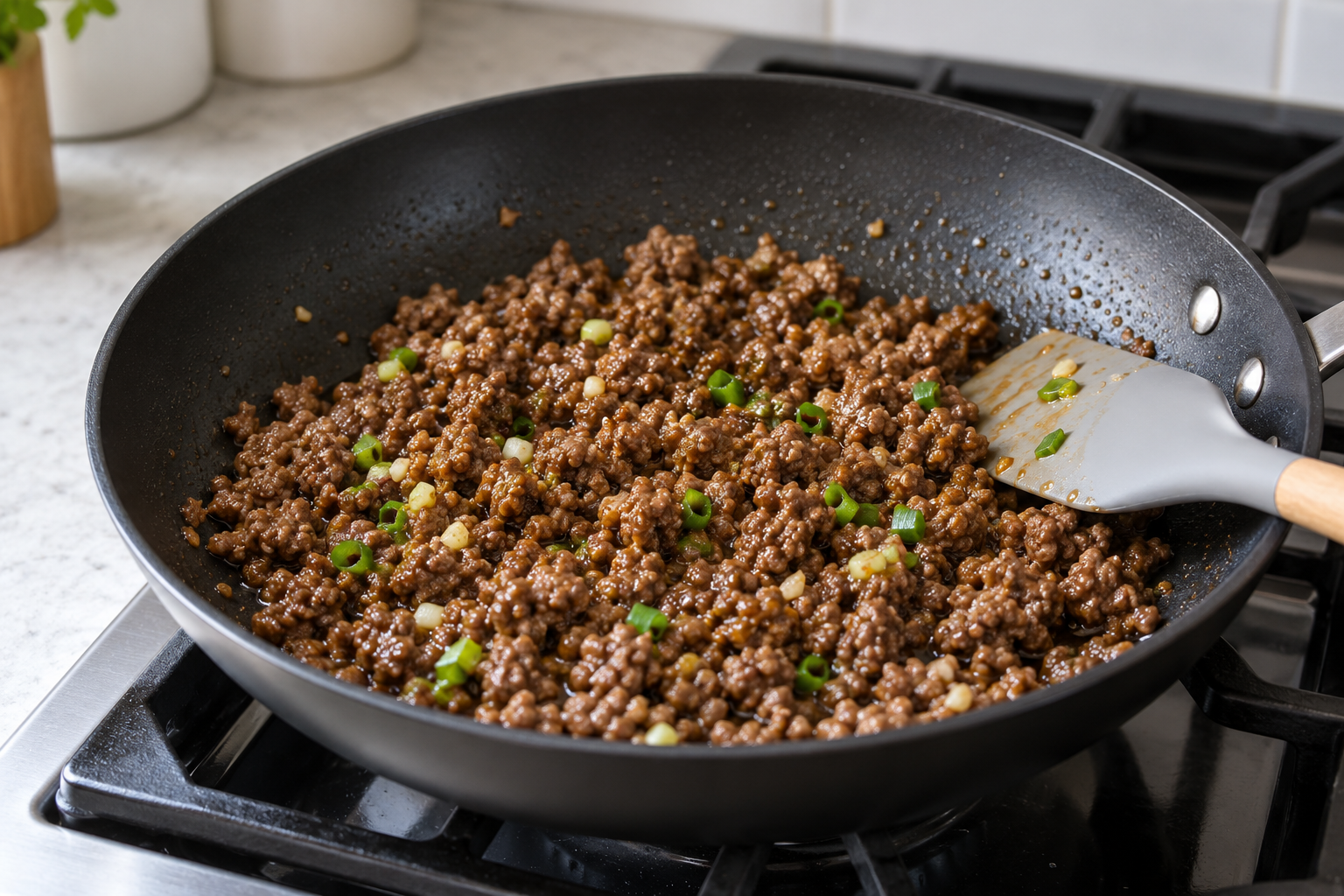
- Beef. Cook in its allocated oil over medium-high heat, breaking into crumbles, until it reaches 160°F (71°C). Check multiple places with a suitable thermometer, following its insertion-depth instructions and avoiding pan contact. Color alone is insufficient.
- Eggs. Fry using the remaining oil, in batches if needed. Turn or cover and continue cooking until both yolks and whites are firm; no raw or runny yolk.
- Assemble. Put 1 US cup cooked rice in each bowl. Divide beef and vegetables equally, add one egg each, and offer sauce separately. Mix before eating. Serve promptly; hot-hold components at 140°F (60°C) or above if needed.
Shopping and substitutions
White button mushrooms may replace cremini. For different rice, follow its own package instructions and measure after cooking. This sauce specifically calls for gochujang; serve it on the side so diners choose their amount.
Allergens: egg, soy and sesame; soy sauce and some gochujang contain wheat. Check all labels and cross-contact warnings; this is not verified gluten-free. Removing beef alone does not remove the egg. Rice wine may contain alcohol.
Storage and safety limits
Chill shallow portions within 2 hours (1 hour above 90°F/32°C); refrigerate at or below 40°F/4°C. Handling limits. Use within 3–4 days. Storage reference. Reheat throughout to 165°F/74°C. Temperature reference.
Read the shared kitchen-safety guide before cooking; the recipe-specific limits above still apply.
Sources and scope
Seasoning ratios follow Hyosun’s Bibimbap, Korean Bapsang. This adaptation selects ground beef and three vegetables; sprouts and cucumber are omitted. Sue Pressey’s bibimbap corroborates separate topping preparation and table mixing, not this sauce formula.
Sources checked October 26, 2026 (UTC). Serving and pan-oil choices remain untested. No personal cooking experience, nutrition estimate, or health benefit is claimed. All four illustrations are AI-generated.
QUESTIONS & EXPERIENCES
Comments 0
Share a question or experience about this guide, then keep the conversation going with replies.
No published comments yet. Be the first to share a question or experience.