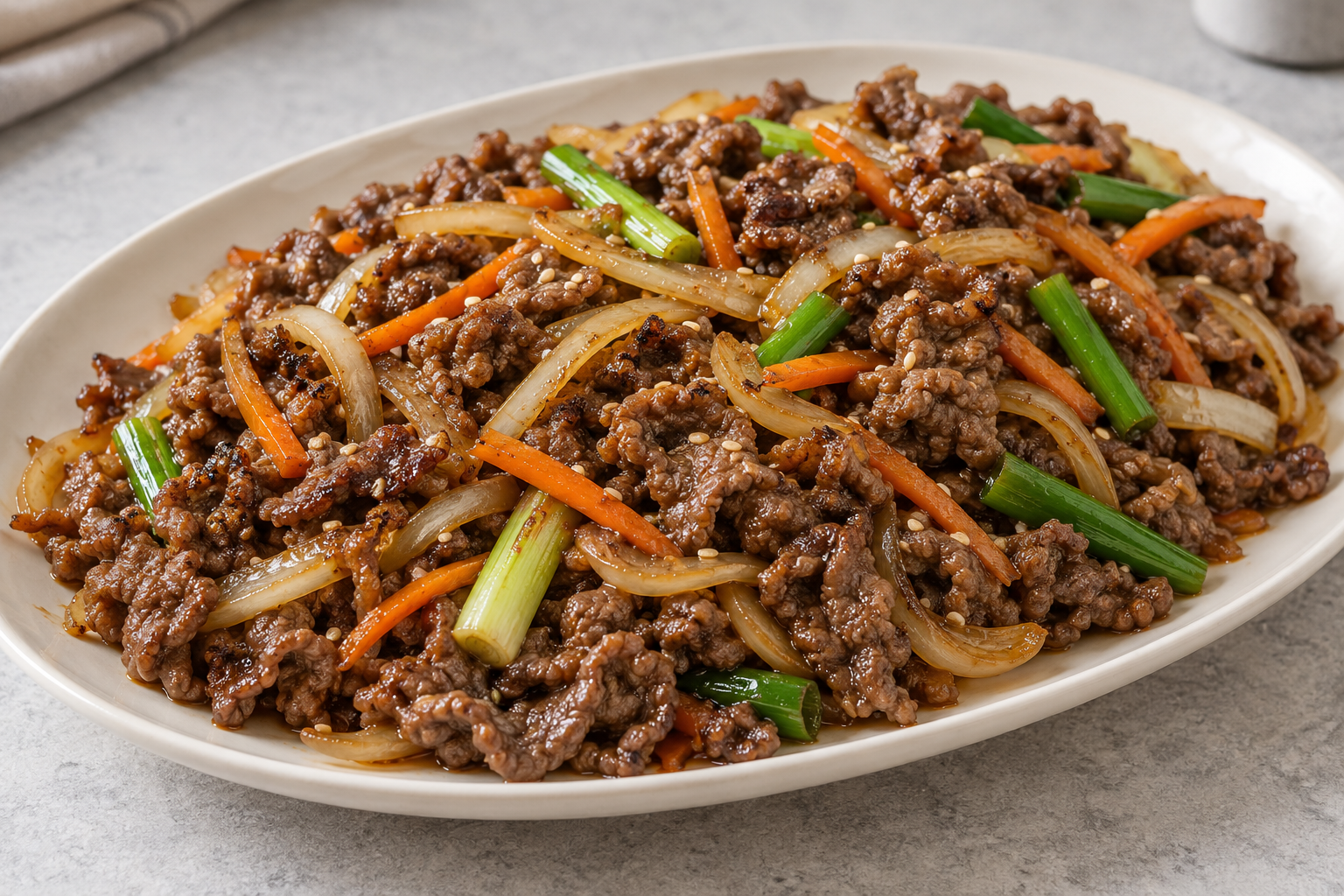
A home-stove bulgogi recipe, written for readers using US groceries and measurements. This is an independently written, source-based adaptation, not a recipe we have cooked or taste-tested.
Before you start
Yield: 4 generous servings. Equipment: a 12-inch (30-cm) heavy skillet, bowl, clean tongs and platter, and a thin-tip food thermometer suitable for thin meat. Preparation and stovetop time have not been timed here.
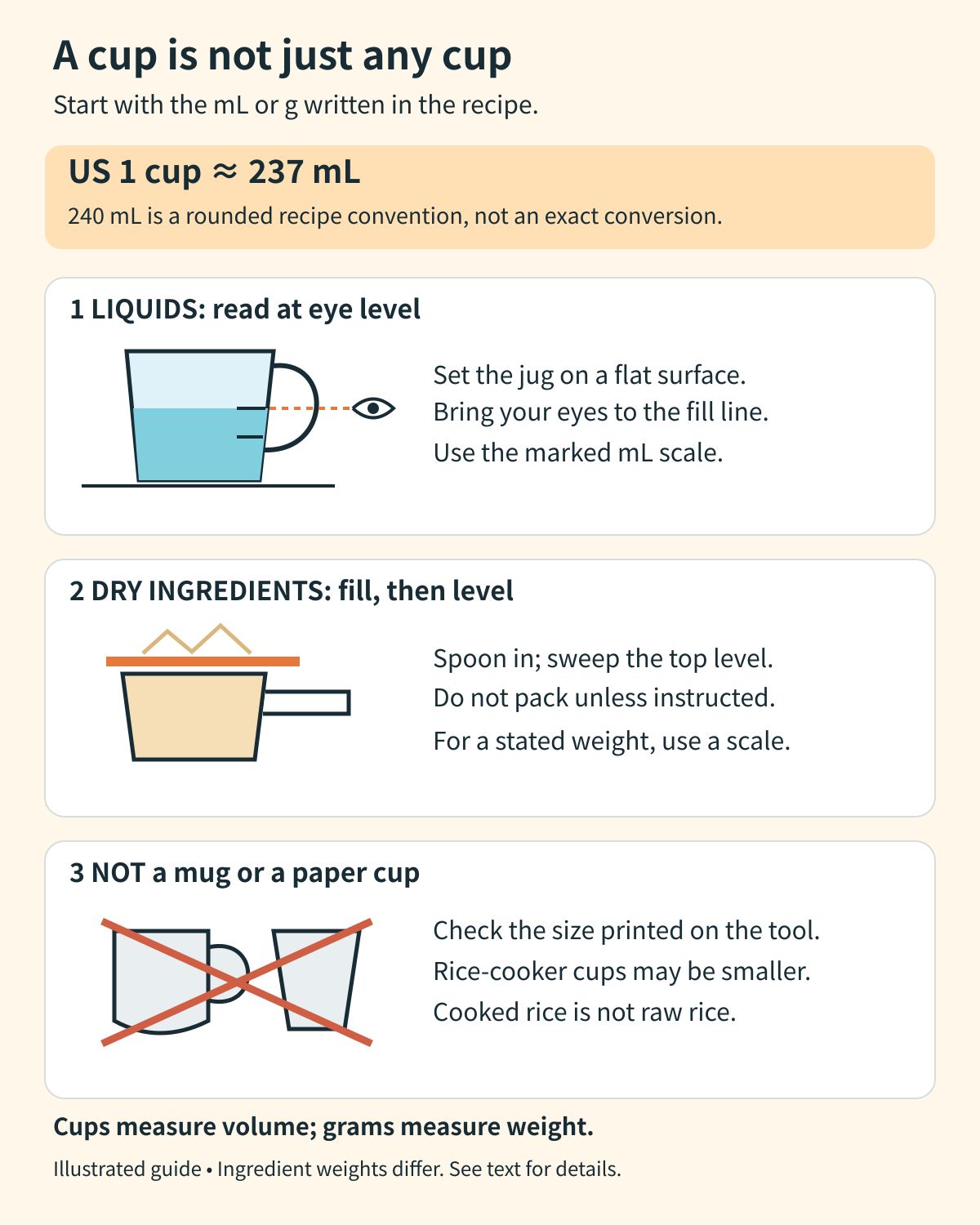
Tbsp = US tablespoon; tsp = US teaspoon. Metric volumes are rounded kitchen equivalents (1 Tbsp ≈ 14.8 mL; 1 tsp ≈ 4.93 mL). Dry spoon measures are volumes, not grams.
Which measuring cup?
Use the stated mL or g when supplied. See our visual measuring guide and unit notes.
Ingredients
- Ribeye, thinly sliced: 2 lb (907 g)
- Scallions: 3, chopped
- Small onion: 1, sliced
- Small carrot: 1, slivered
Marinade
- Soy sauce: 6 Tbsp (90 mL)
- Water: 3 Tbsp (45 mL)
- Sugar: 4 Tbsp (60 mL)
- Rice wine: 2 Tbsp (30 mL)
- Minced garlic: 2 Tbsp (30 mL)
- Toasted sesame oil: 2 Tbsp (30 mL)
- Sesame seeds: 2 tsp (10 mL)
- Asian pear: ½, peeled, cored, grated
- Black pepper: ⅛ tsp (0.6 mL)
Method
- Set up. Wash produce; do not rinse beef. Keep raw-meat utensils separate from cooked-food utensils. Slice across the grain about ⅛ inch (3 mm) thick; cut scallions into 2-inch (5-cm) pieces. Separate folded beef slices.
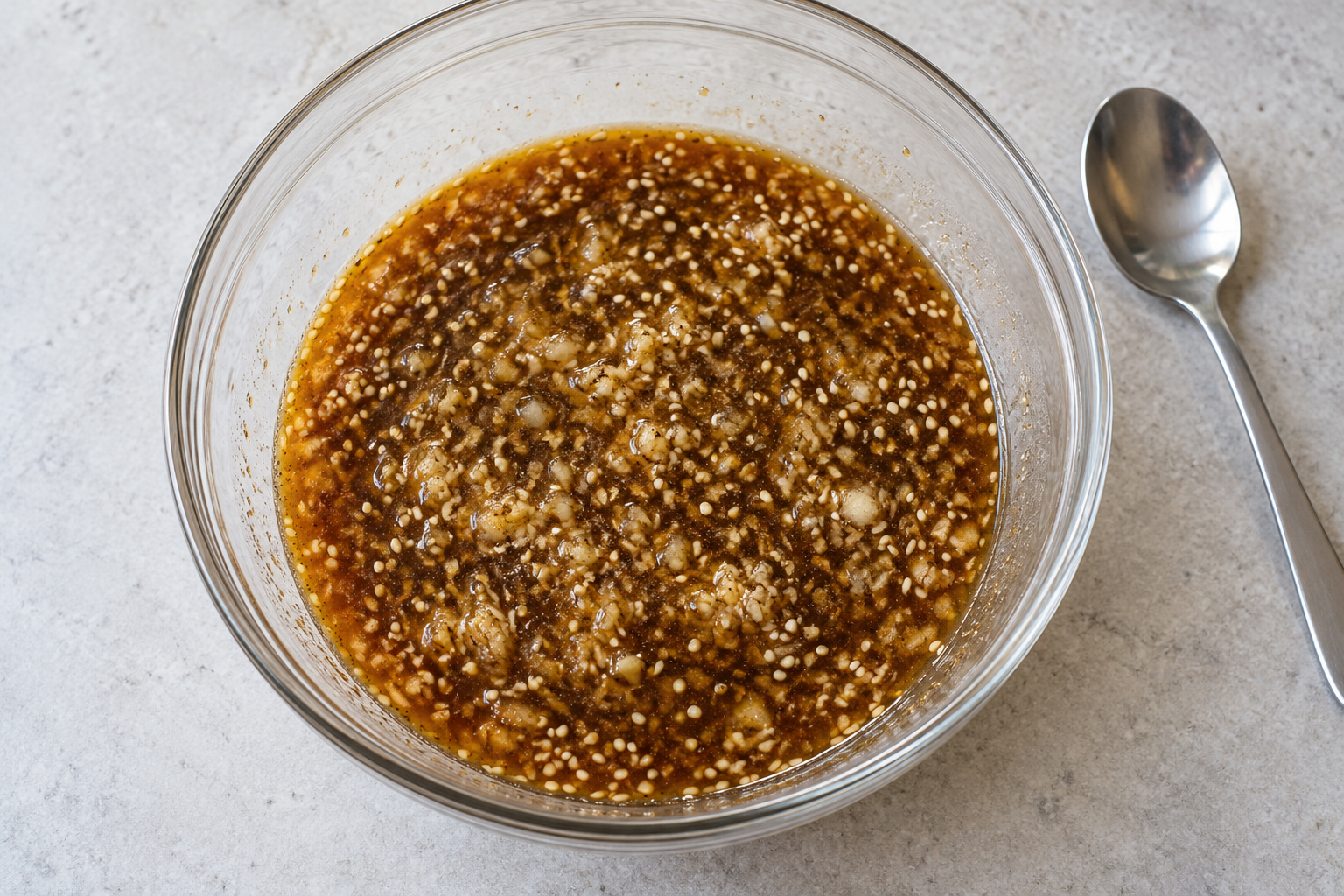
- Mix. Stir the marinade ingredients together.
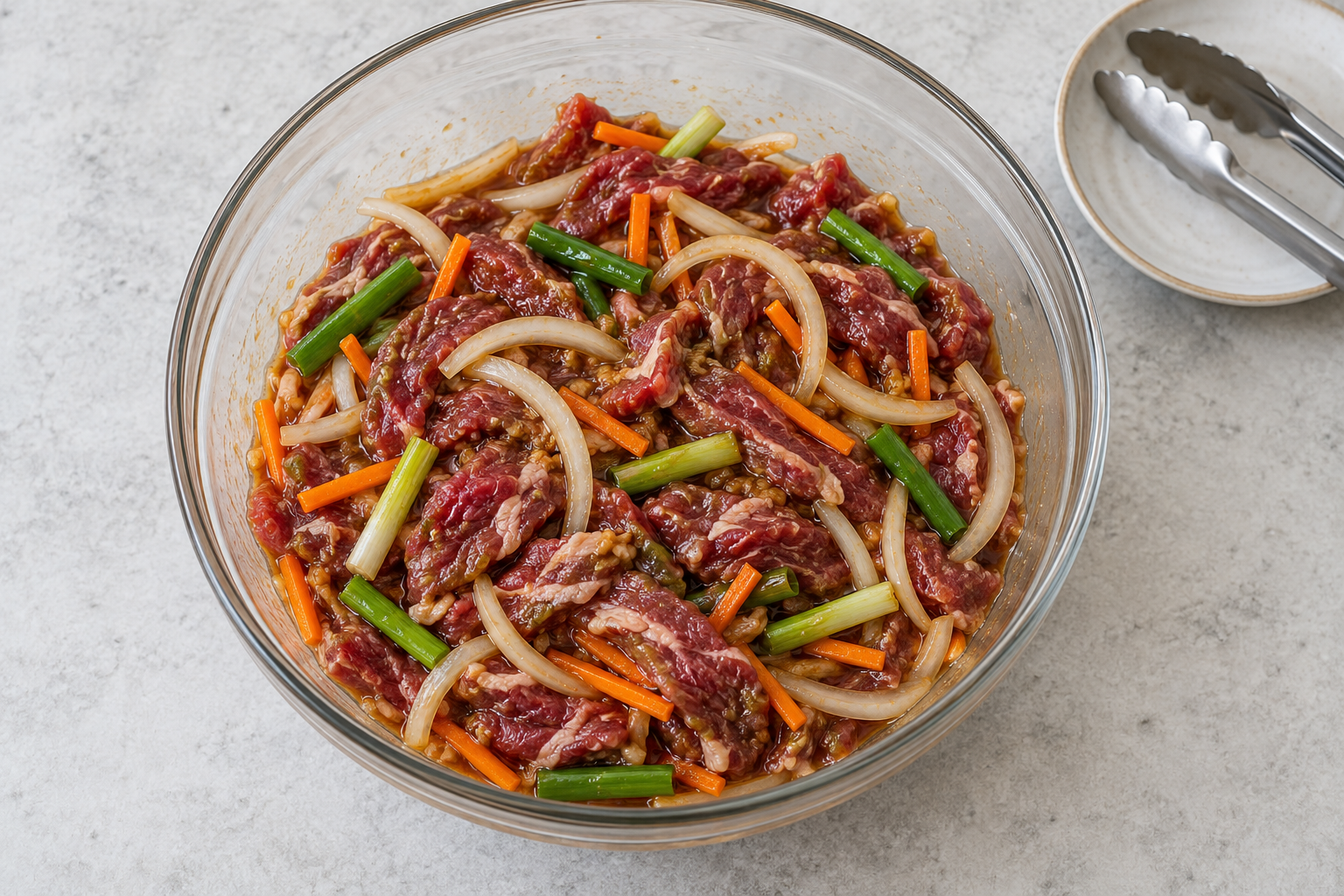
- Chill. Coat beef and vegetables with marinade. Cover and refrigerate at 40°F (4°C) or colder for 30–60 minutes.
- Cook. Heat the skillet over medium-high heat. Lift out an uncrowded batch, leaving excess marinade behind. Turn as it cooks; reduce heat if the coating scorches. Keep remaining raw mixture refrigerated. Discard unused raw marinade.
- Measure and rest. Beef sliced from steak must reach at least 145°F (63°C), then rest at least 3 minutes. Insert a clean, suitable thin-tip thermometer sideways into the thickest pieces, following its sensing-depth instructions; check multiple pieces without touching the pan. Transfer to a clean platter. The final batch needs its own full rest before serving.

Ground beef, if substituted, requires 160°F (71°C); it is not the sliced-steak version illustrated.
Shopping and substitutions
Top sirloin can replace ribeye. Bosc pear or sweet apple can replace Asian pear; fruit size varies. Do not substitute pineapple or kiwi at the same quantity. These choices follow the formulation reference.
Allergens: soy and sesame; conventional soy sauce commonly contains wheat. Check every ingredient label and cross-contact warning. This is not verified gluten-free or sesame-free. Rice wine may contain alcohol; cooking is not an alcohol-free guarantee.
Storage and safety limits
Chill shallow portions within 2 hours (1 hour above 90°F/32°C); refrigerate at or below 40°F/4°C. Handling limits. Use within 3–4 days. Storage reference. Reheat throughout to 165°F/74°C. Temperature reference.
Read the shared kitchen-safety guide before cooking; the recipe-specific limits above still apply.
Sources and scope
Ingredient ratios follow Hyosun’s Bulgogi, Korean Bapsang; optional carrot is included. Maangchi’s bulgogi also informed slicing and skillet technique, not marinade proportions. Writing, safety instructions, and illustrations were prepared independently.
Sources checked October 26, 2026 (UTC). No hands-on cooking or taste test was performed. All four illustrations are AI-generated.
QUESTIONS & EXPERIENCES
Comments 0
Share a question or experience about this guide, then keep the conversation going with replies.
No published comments yet. Be the first to share a question or experience.