Make jajangmyeon with Korean chunjang, pork, vegetables and thick wheat noodles. Also spelled jjajangmyeon (짜장면), this version uses onion, cabbage and zucchini. This is an independently written, source-informed adaptation; we have not cooked or taste-tested it.
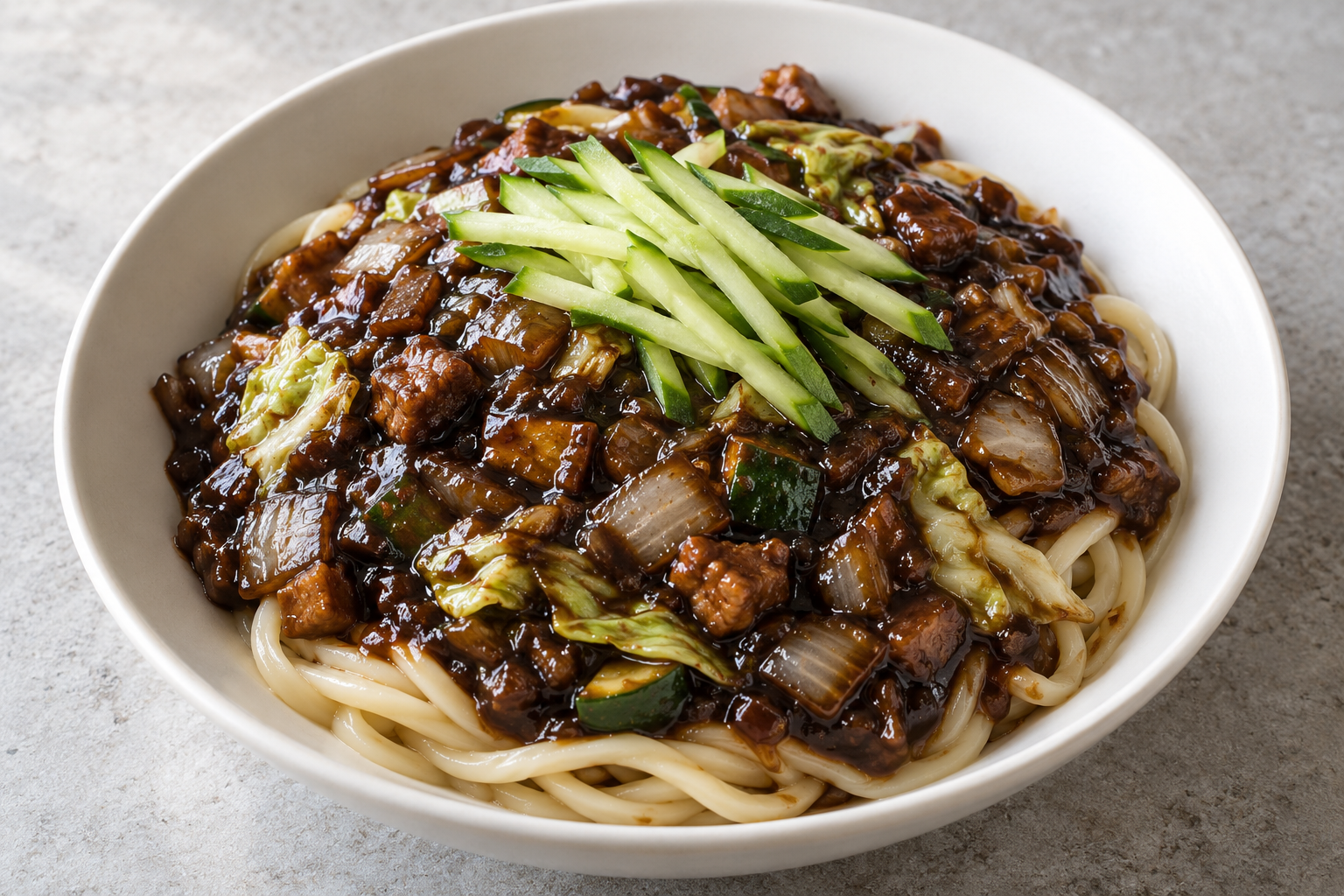
Before you start
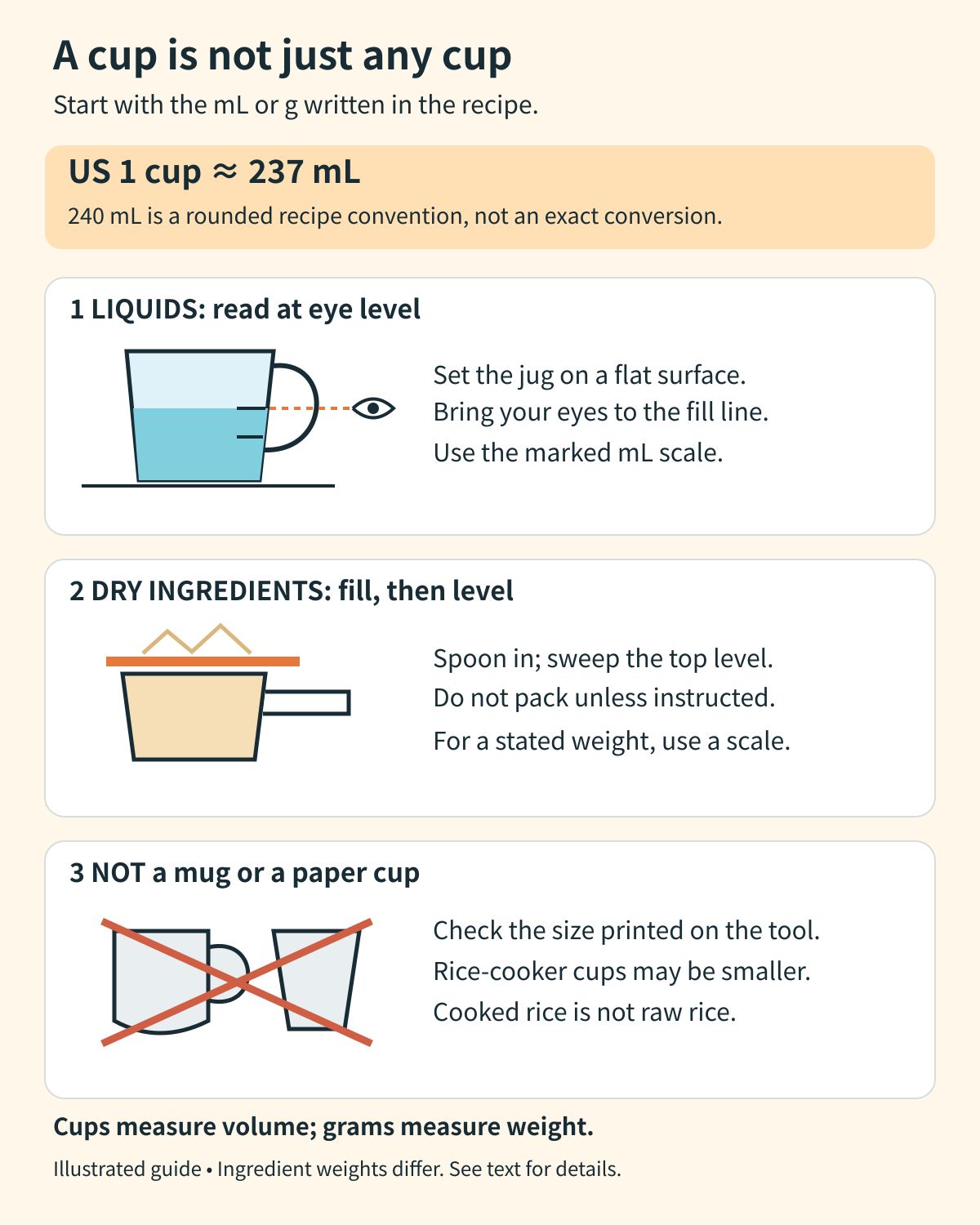
Yield: 3 bowls. Equipment: large deep skillet, small saucepan, noodle pot, colander and food thermometer. No fixed total time is promised: vegetable size, heat and noodle brand affect the result. Metric weights are rounded; spoon measures are volumes (1 tablespoon ≈ 15 mL, 1 teaspoon ≈ 5 mL, 1 US cup ≈ 237 mL (rounded to 240 mL in this recipe)).
Which measuring cup?
Use the stated mL or g when supplied. See our visual measuring guide and unit notes.
Ingredients
- 18 oz (510 g) fresh jajangmyeon noodles
- 8 oz (225 g) boneless pork shoulder, cut into ½-inch (1.3 cm) pieces
- 12 oz (340 g) onion, diced
- 8 oz (225 g) green cabbage, cut into small squares
- 8 oz (225 g) zucchini, diced
- 5 tablespoons (75 mL) Korean chunjang
- 4 tablespoons (60 mL) neutral cooking oil, divided
- 1 tablespoon (15 mL) granulated sugar
- 1 tablespoon (15 mL) soy sauce
- 1 tablespoon (15 mL) mirin; 1 teaspoon (5 mL) grated ginger
- 1 cup (240 mL) water, plus extra if needed
- 1 tablespoon (15 mL) potato starch or cornstarch, mixed with ¼ cup (60 mL) cold water
- 1 small cucumber, thinly sliced into matchsticks
Method
- Prepare. Cut the vegetables to a similar size. Keep raw pork and its utensils away from the cucumber and other ready-to-eat food. Toss pork with mirin and ginger; refrigerate while you finish preparation.
- Fry the paste. Stir chunjang, sugar and 2 tablespoons oil in the small saucepan over medium heat for about 2–3 minutes, without burning. Stir continuously. Follow package directions for pre-fried paste.

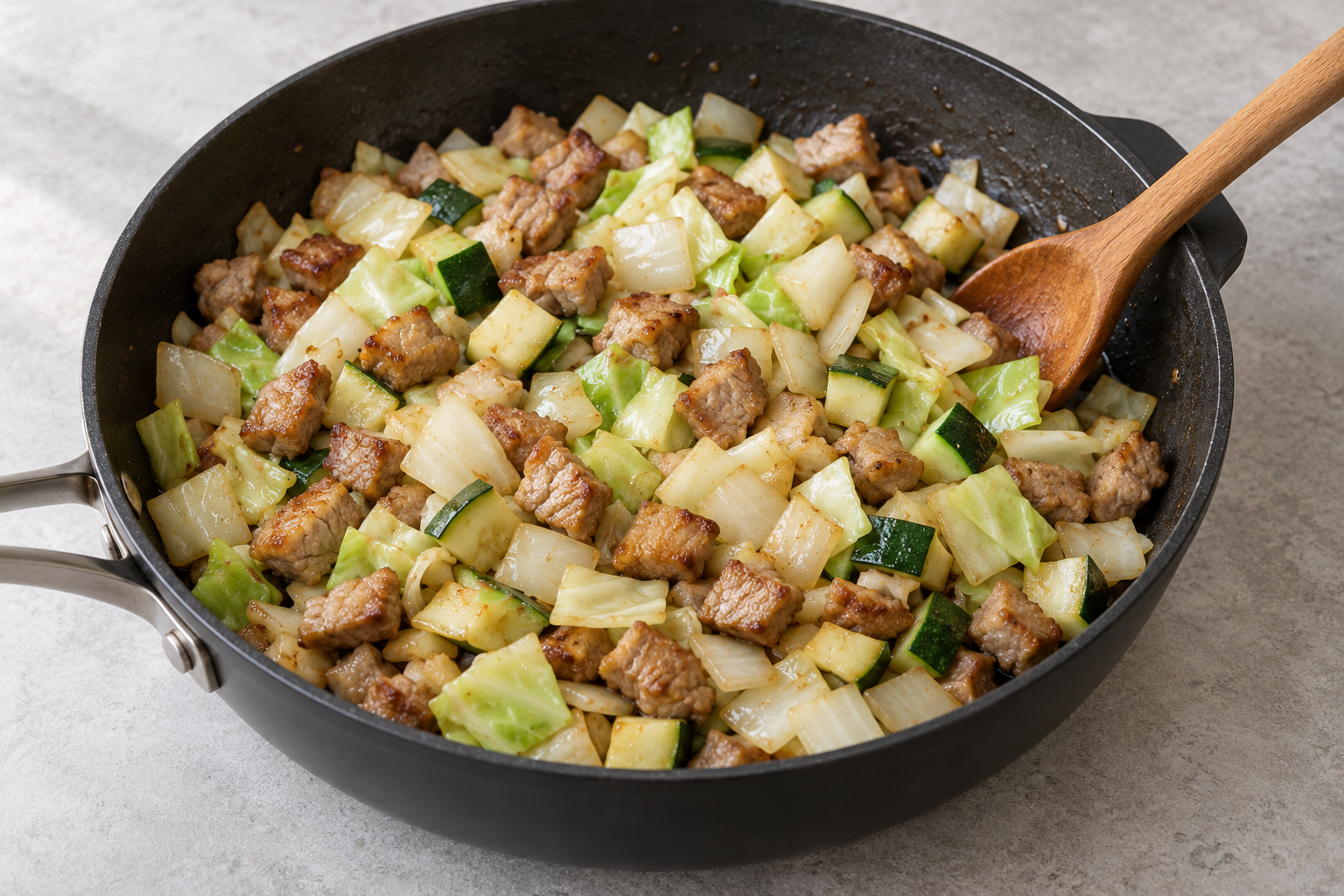
- Cook pork and vegetables. Heat the remaining oil in the large skillet. Add pork, then soy sauce as it cooks. Stir in onion; when it starts softening, add cabbage and zucchini. Cook, stirring, until the vegetables soften. Browning is a flavor cue, not a safety test.
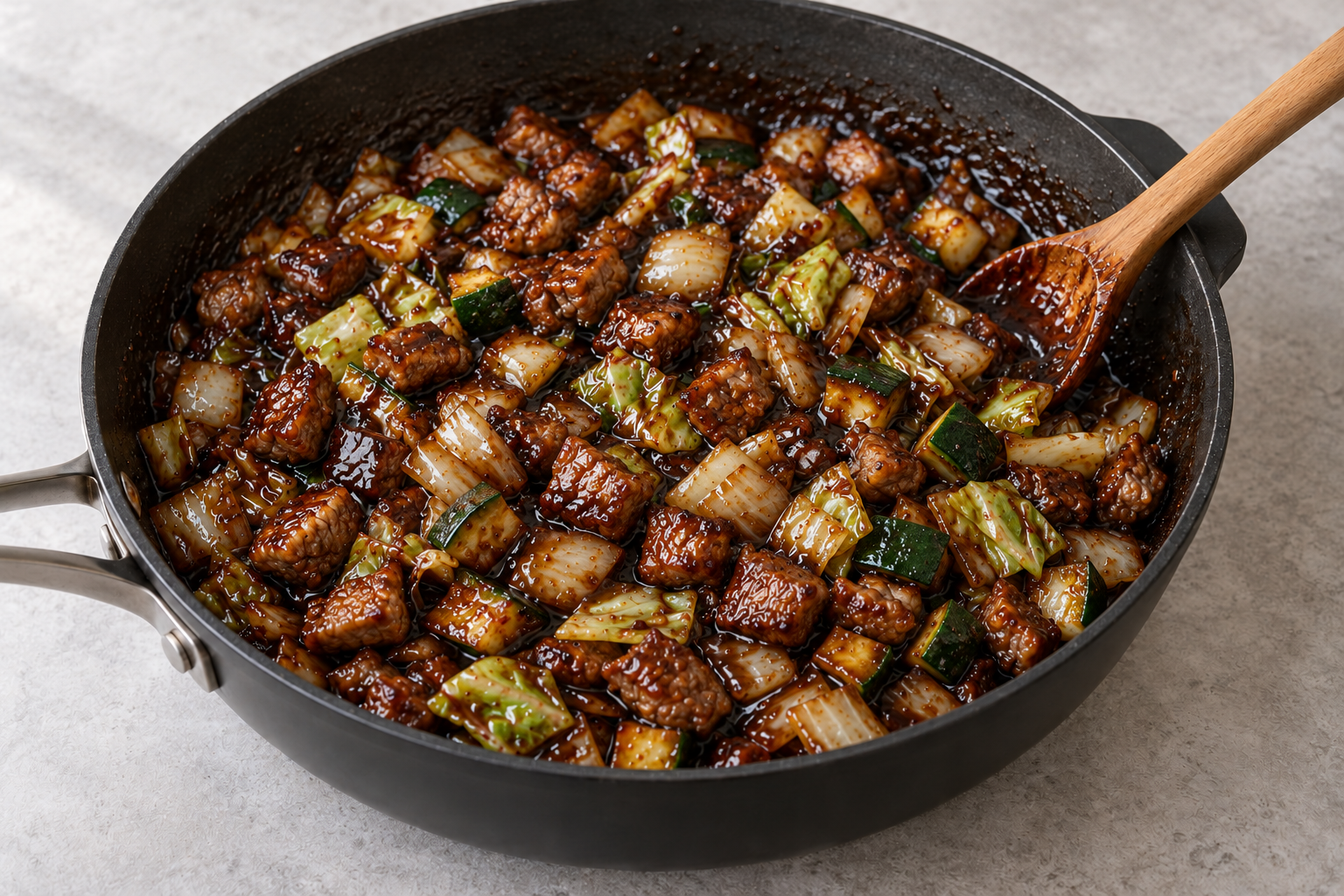
- Build the sauce. Stir in the fried paste and 1 cup water. Simmer until vegetables are tender. Check the largest pork pieces with a food thermometer: reach at least 145°F (63°C), then allow at least 3 minutes before eating. This is the whole-cut pork standard; ground pork instead requires 160°F (71°C). Keep cooking if the appropriate temperature has not been reached.
- Thicken. Re-stir the starch slurry and pour it in gradually while stirring the bubbling sauce. Stop when it coats a spoon; you may not need every drop. If too thick, loosen with a little water and return to a simmer.
- Serve. Cook noodles according to their package, including any rinsing instructions, then drain well. Divide among three bowls, spoon over the hot sauce and finish with cucumber.
Shopping and substitutions
Look for chunjang (춘장), the Korean paste for jajang sauce. Chinese fermented-black-bean or black-bean-garlic sauce is not an equivalent replacement; neither are canned black beans. Fresh udon is a practical noodle alternative, with its own package cooking directions. For a different meal, serve the sauce over cooked rice rather than claiming it is a noodle dish.
Allergens: expect wheat and soy in typical noodles, chunjang and soy sauce; some noodles also contain egg. Check every package, including mirin and starch, for your specific allergens and cross-contact information. This recipe is not presented as gluten-free or allergen-free.
Storage and safety limits
Chill shallow portions within 2 hours (1 hour above 90°F/32°C); refrigerate at or below 40°F/4°C. Handling limits. Use within 3–4 days. Storage reference. Reheat throughout to 165°F/74°C. Temperature reference.
Read the shared kitchen-safety guide before cooking; the recipe-specific limits above still apply.
Sources and scope
- Hyosun, Korean Bapsang: ingredient framework, chunjang distinction and noodle options.
- Maangchi: sauce-thickening and serving technique.
- Sue Pressey, My Korean Kitchen: separate paste frying and fresh-udon alternative.
- FoodSafety.gov: refrigerated leftover limits; FDA: food-allergen label guidance.
Sources checked October 26, 2026 (UTC). Quantities and wording have been adapted; no hands-on cooking test or nutrition analysis has been performed. Illustrations explain stages, not exact yield, doneness or a verified cooking result.
QUESTIONS & EXPERIENCES
Comments 0
Share a question or experience about this guide, then keep the conversation going with replies.
No published comments yet. Be the first to share a question or experience.