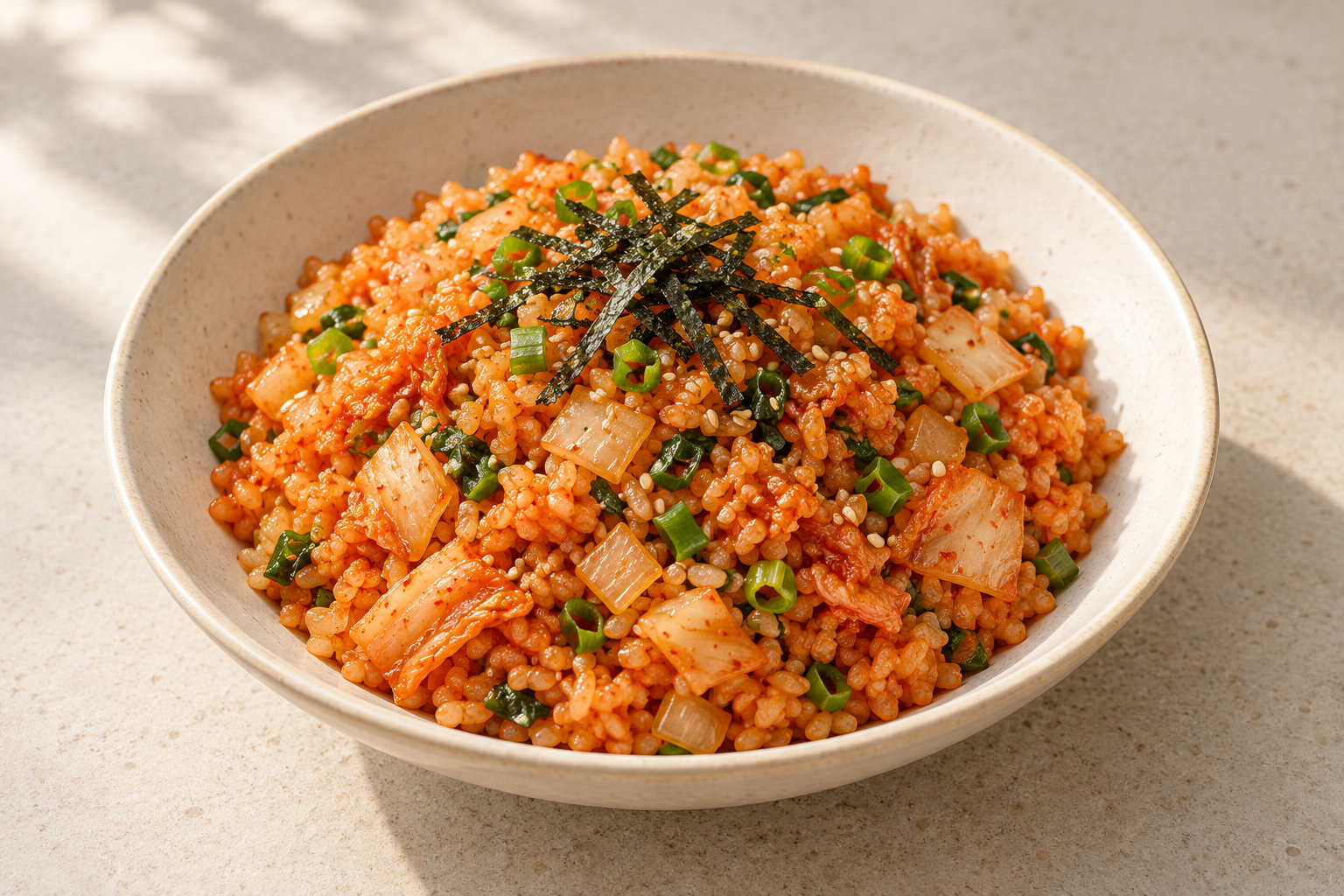
Cook kimchi first, then stir in the rice over gentler heat. This version leaves out meat and an egg topping. It is based on a published recipe, not a cooking test performed by us.
Which measuring cup?
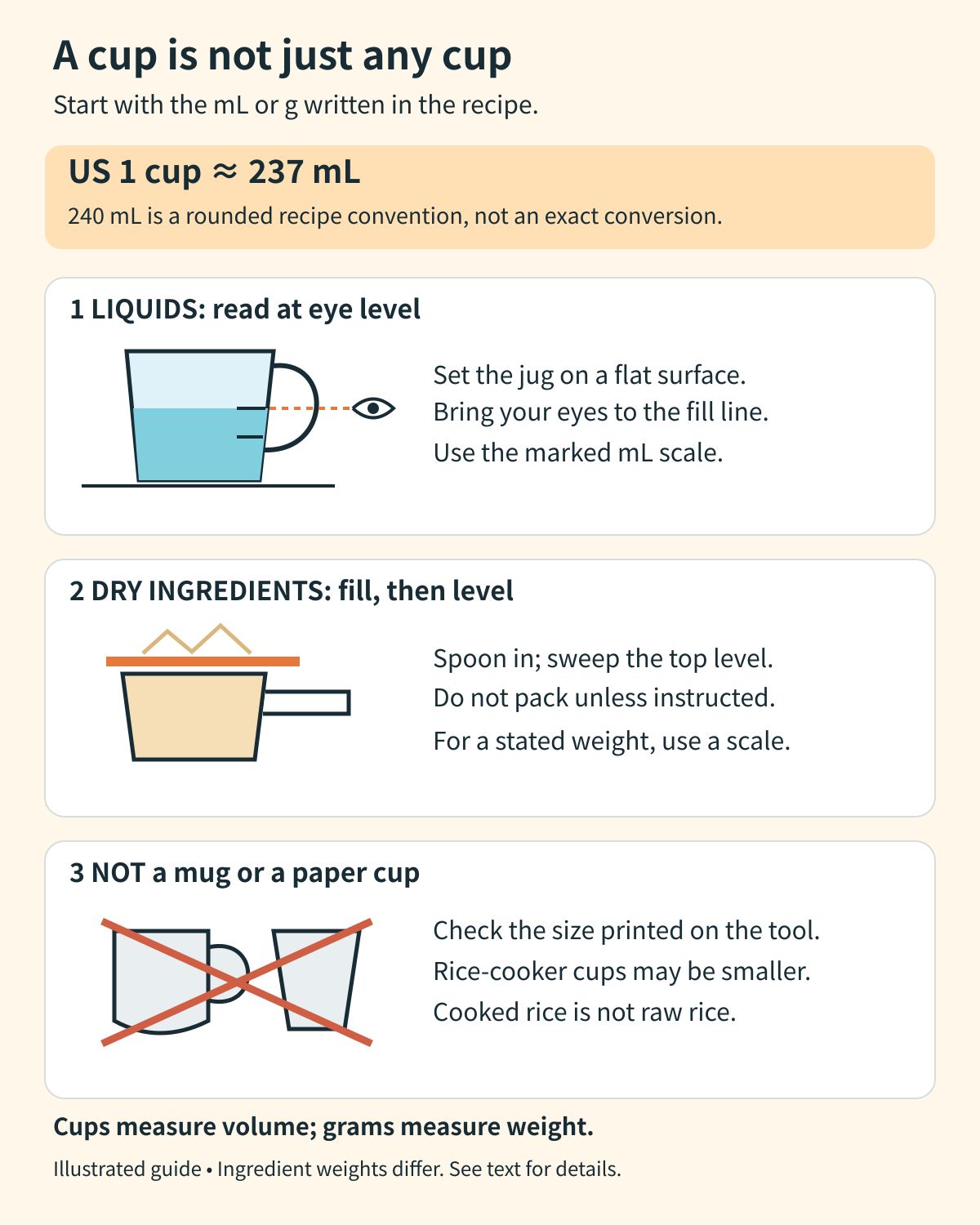
Use the stated mL or g when supplied. See our visual measuring guide and unit notes.
Ingredients and method
Based on Korean Bapsang, without meat. Metric conversions indicate rounded US measuring-cup volumes, not weights.
- 2½ cups cooked rice (about 590 mL by volume)
- ¾ cup chopped kimchi (about 180 mL)
- ¼ small onion, diced; 1 scallion, chopped
- 3 tbsp kimchi juice (45 mL)
- 1 tbsp each soy sauce and gochujang (15 mL each)
- Cooking oil for the skillet
- ½ tbsp sesame oil (7.5 mL)
- Salt and pepper, as needed
- Optional: 1 tsp sesame seeds; 1 roasted seaweed sheet, sliced
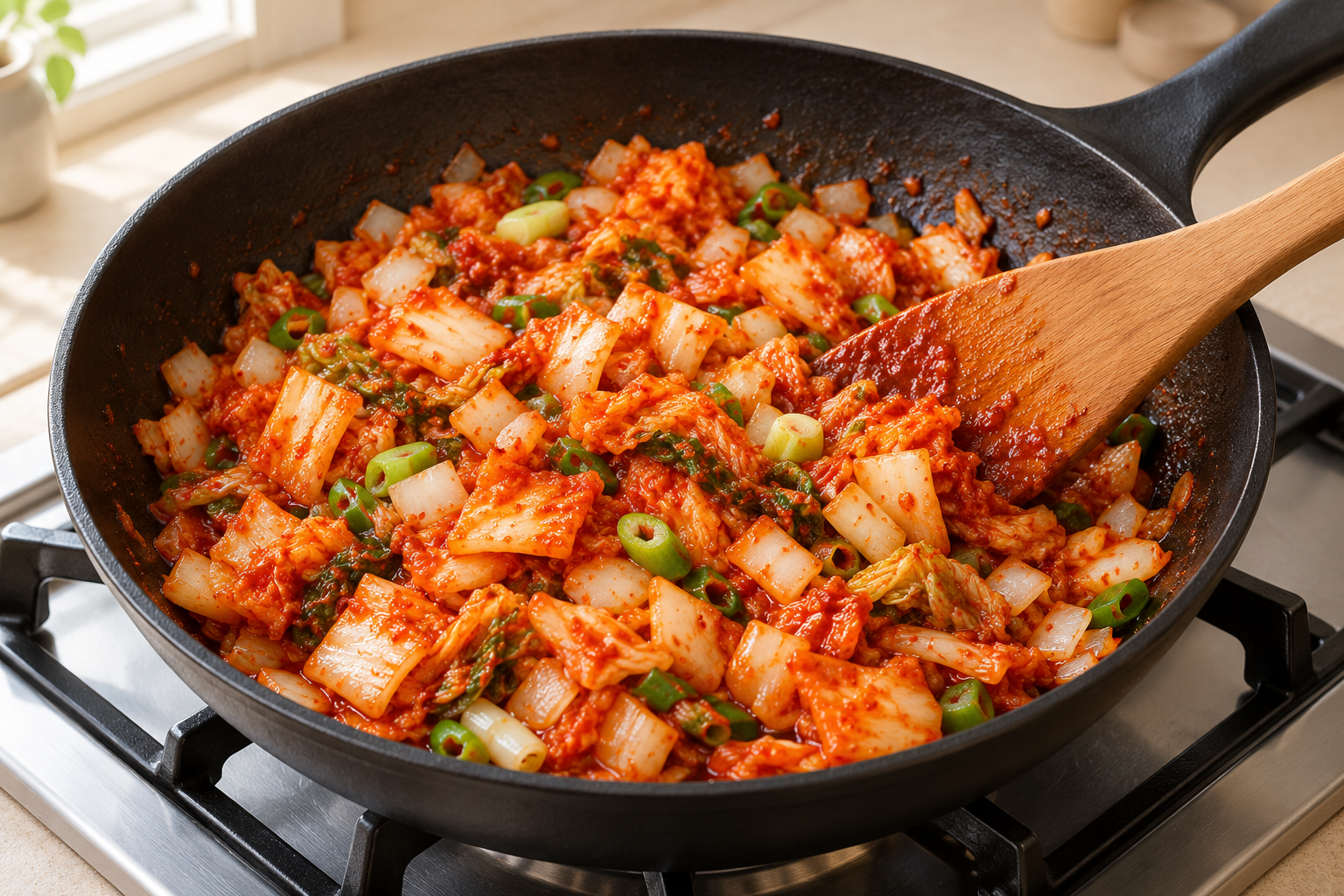
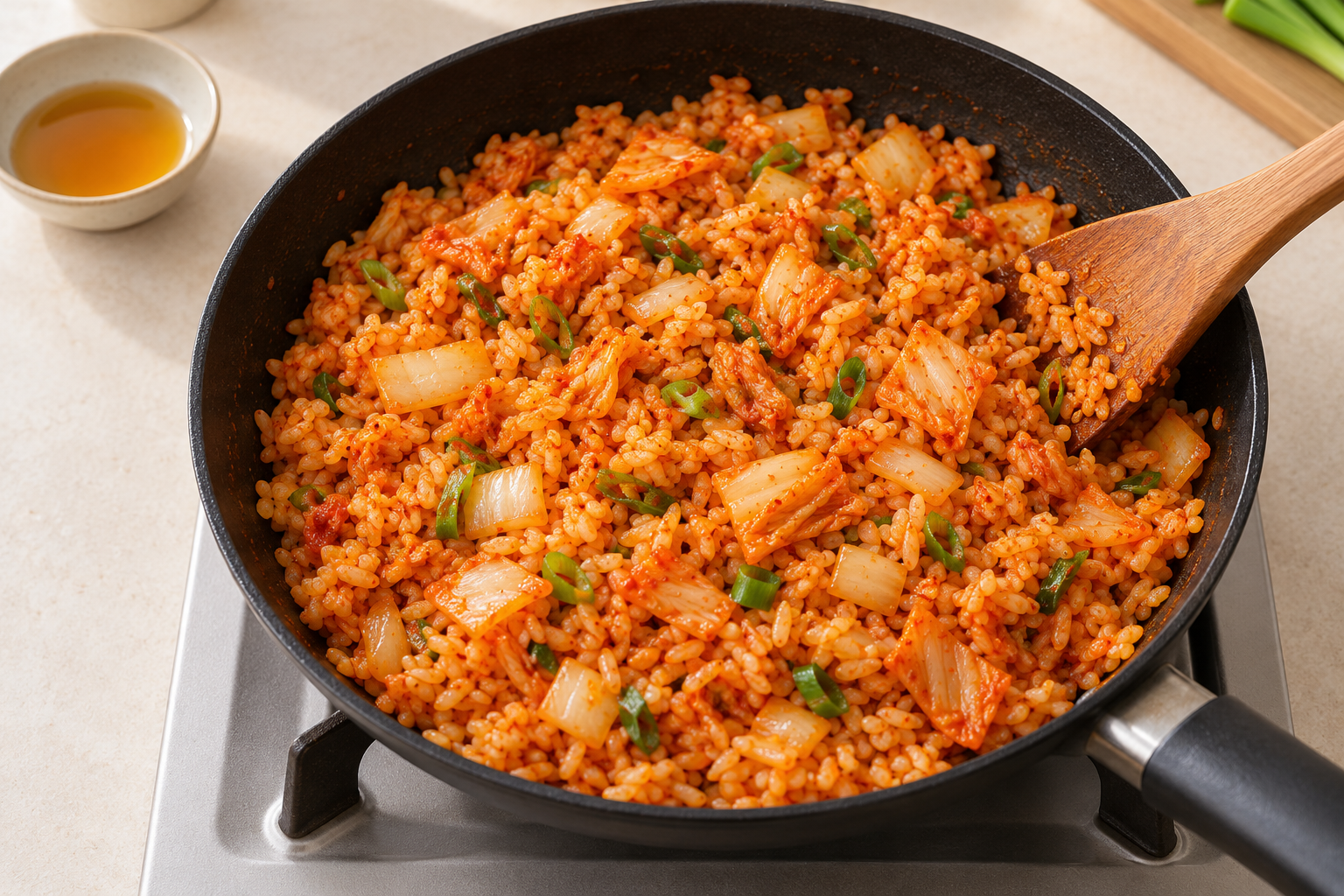
- Heat an oiled skillet. Briefly stir-fry onion and scallion over high heat. Add kimchi, juice, soy sauce and gochujang; stir until softened, approximately 3–4 minutes.
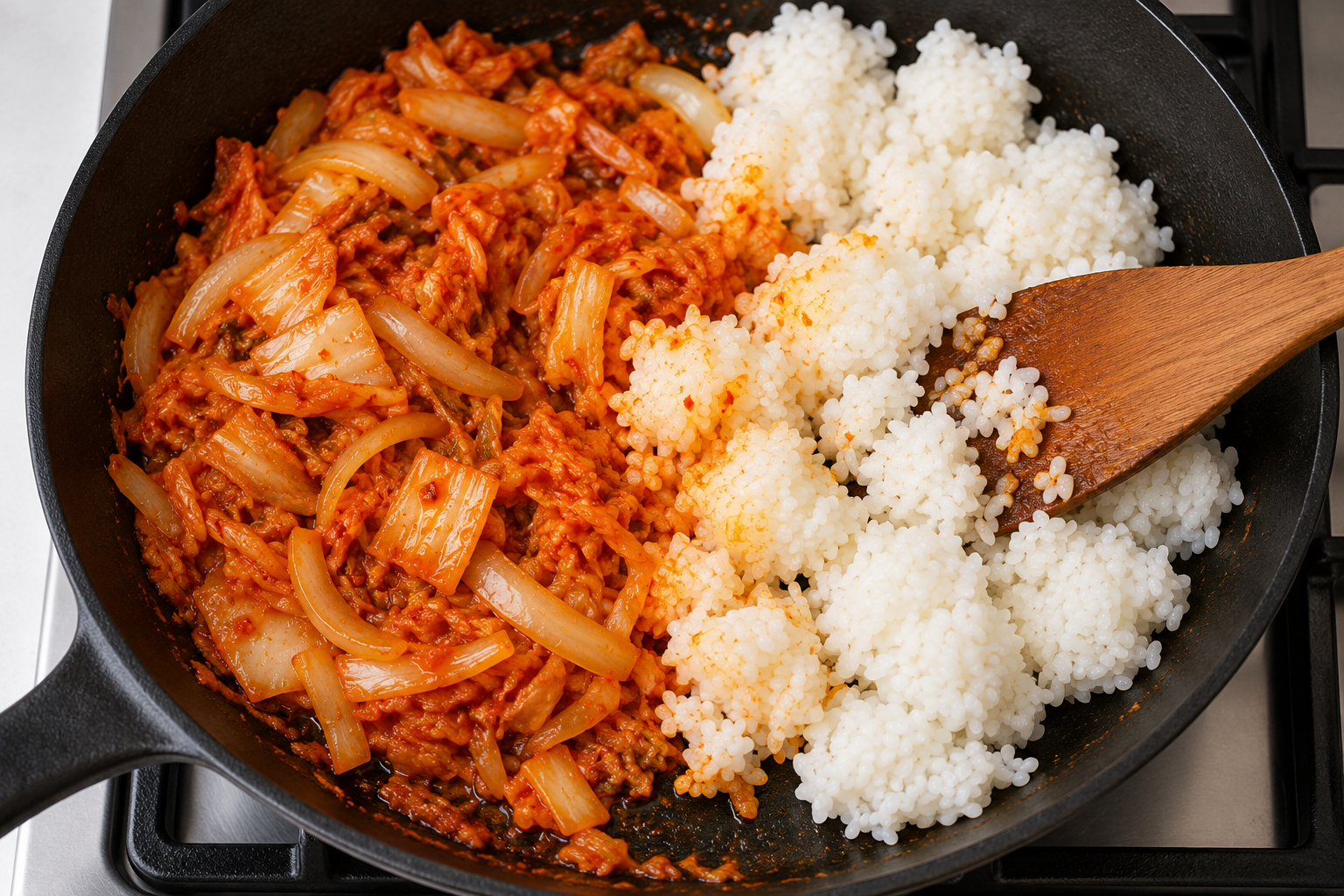
- Add rice. Reduce to medium-low; break up clumps and mix for approximately 3–4 minutes.
- Increase heat and turn occasionally. Season as needed; finish with sesame oil and optional seeds. Add optional seaweed.
Rice safety comes before texture
Use rice with a known storage history—not rice left on the counter overnight. FoodSafety.gov identifies rice and leftovers held too long at room temperature as possible sources of Bacillus cereus. Cool cooked rice promptly in a wide, shallow container and refrigerate it. Reheated leftovers should reach 165°F (74°C), checked with a food thermometer; the approximate cooking minutes above are not a substitute for that check.
FDA guidance is to refrigerate perishables within two hours, or one hour above 90°F (32°C), and keep the refrigerator at 40°F (4°C) or colder. Discard rice whose handling is uncertain rather than relying on its smell. Keep leftovers covered and follow the storage directions on packaged ingredients.
Shopping in the US and ingredient checks
Check the package name, not just the red color: gochujang is the paste listed here, while gochugaru is chili powder. If your store does not stock the required ingredient, use a Korean grocery or select a separately documented recipe instead of guessing a one-for-one replacement.
The original author also permits brown or mixed-grain rice. Follow your rice package’s cooking instructions; the illustrations here use white rice.
Leaving out meat does not automatically make the dish vegan or allergen-free. Check kimchi for fish or shrimp ingredients and sauces for soy and wheat; sesame oil and optional seeds are also relevant to sesame allergy. Read the exact packages you will use. We have not verified a particular product’s allergen status.
Scope and sources
This page explains a cooked-rice dish, not how to ferment kimchi. Preparation and cooking times have not been measured in our kitchen, and no nutrition or star-rating claims are supplied. All four images are AI-created examples.
- Original recipe: Korean Bapsang, Kimchi Fried Rice
- FoodSafety.gov: bacteria, rice and leftovers
- FoodSafety.gov: safe temperatures
- FDA: storing food safely
- FDA: food allergy labels
Sources checked: October 27, 2026 (Korea Standard Time).
Read the shared kitchen-safety guide; the recipe-specific limits above still apply.
QUESTIONS & EXPERIENCES
Comments 0
Share a question or experience about this guide, then keep the conversation going with replies.
No published comments yet. Be the first to share a question or experience.