For a first batch of napa cabbage kimchi, follow one complete recipe rather than combining salt amounts and fermentation times from different versions. It is documentation-based guidance, not a recipe we have cooked or laboratory-tested ourselves.
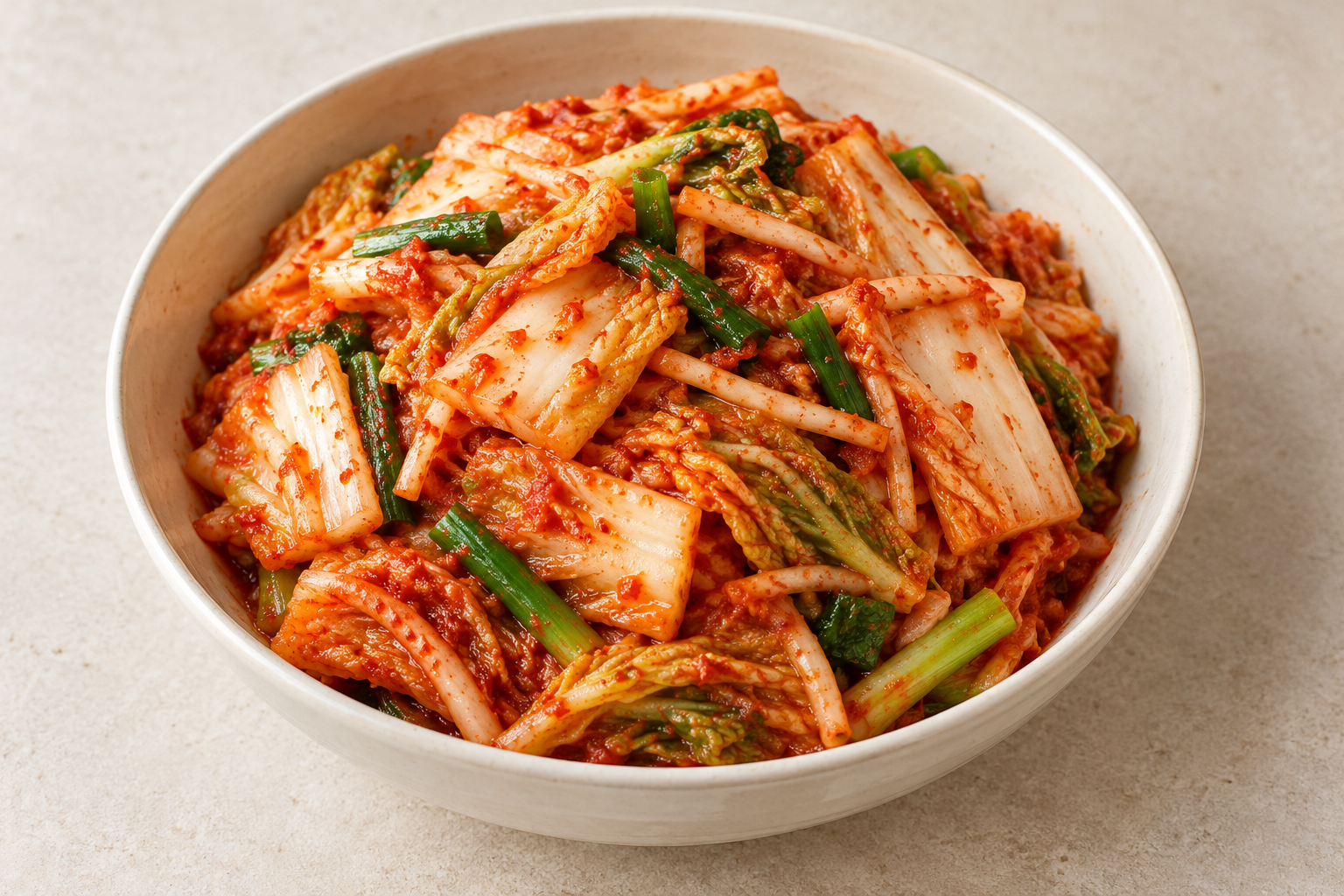
Before you start
Kimchi is not a pantry-stable pickle. Prepare refrigerator space before starting. Use fresh vegetables, clean hands, and clean, sanitized food-contact equipment. University of Georgia Extension explains that salt, temperature, time, and acidity work together in fermentation; a pleasant smell or attractive color is not proof that a batch is safe. Do not reduce the prescribed salting stage to make a low-sodium version.
This is a chopped-cabbage version, not whole-leaf kimchi, fresh geotjeori, or a canning recipe. The images explain the intended stages; they cannot confirm salt concentration, acidity, or safe storage.
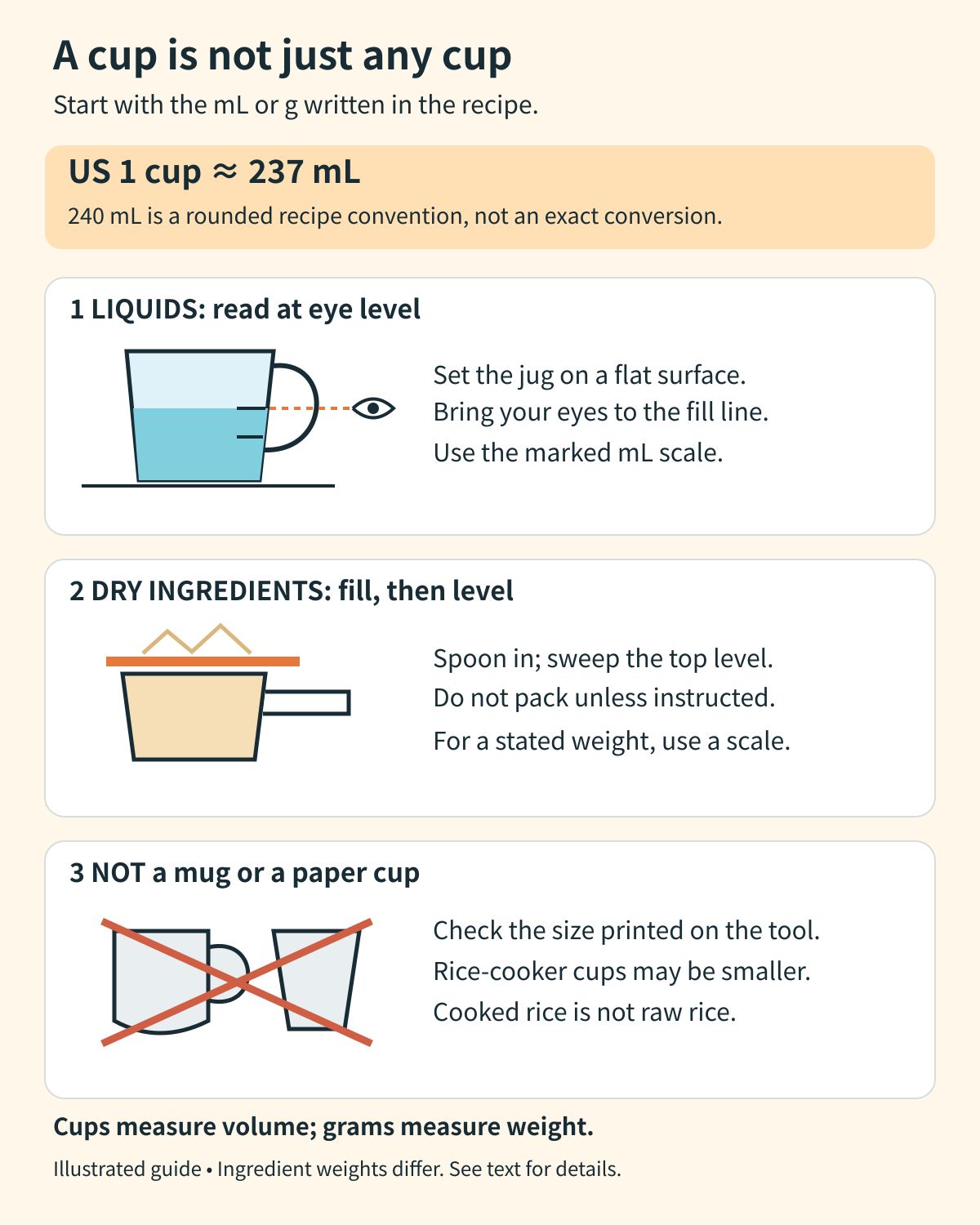
Which measuring cup?
Use the stated mL or g when supplied. See our visual measuring guide and unit notes.
Ingredients
Adapted from CSU Extension’s kimchi guide. Metric equivalents are rounded.
- 2 napa cabbages, 6–8 lb total (2.7–3.6 kg)
- 1½ cups coarse noniodized salt, divided
- 1 gallon cold water (3.8 L), plus ½ cup (118 mL)
- 2 tbsp sweet rice flour
- 1–10 garlic cloves
- 3 ginger slices, 0.2–0.4 oz (6–11 g)
- 1 cup Korean kimchi chili powder
- ½ Korean radish or daikon, 1–1½ lb (450–680 g)
- 10 green onions
- Optional: 1 Asian pear; 1 tsp fish sauce
Method
- Wash vegetables; core cabbage and chop into 2-inch (5-cm) pieces.
- Dip cabbage in ½ cup salt mixed with the gallon of water; discard liquid. Massage remaining coarse salt into cabbage. Cover at room temperature 3–6 hours; rinse 3–4 times; drain at least 30 minutes.
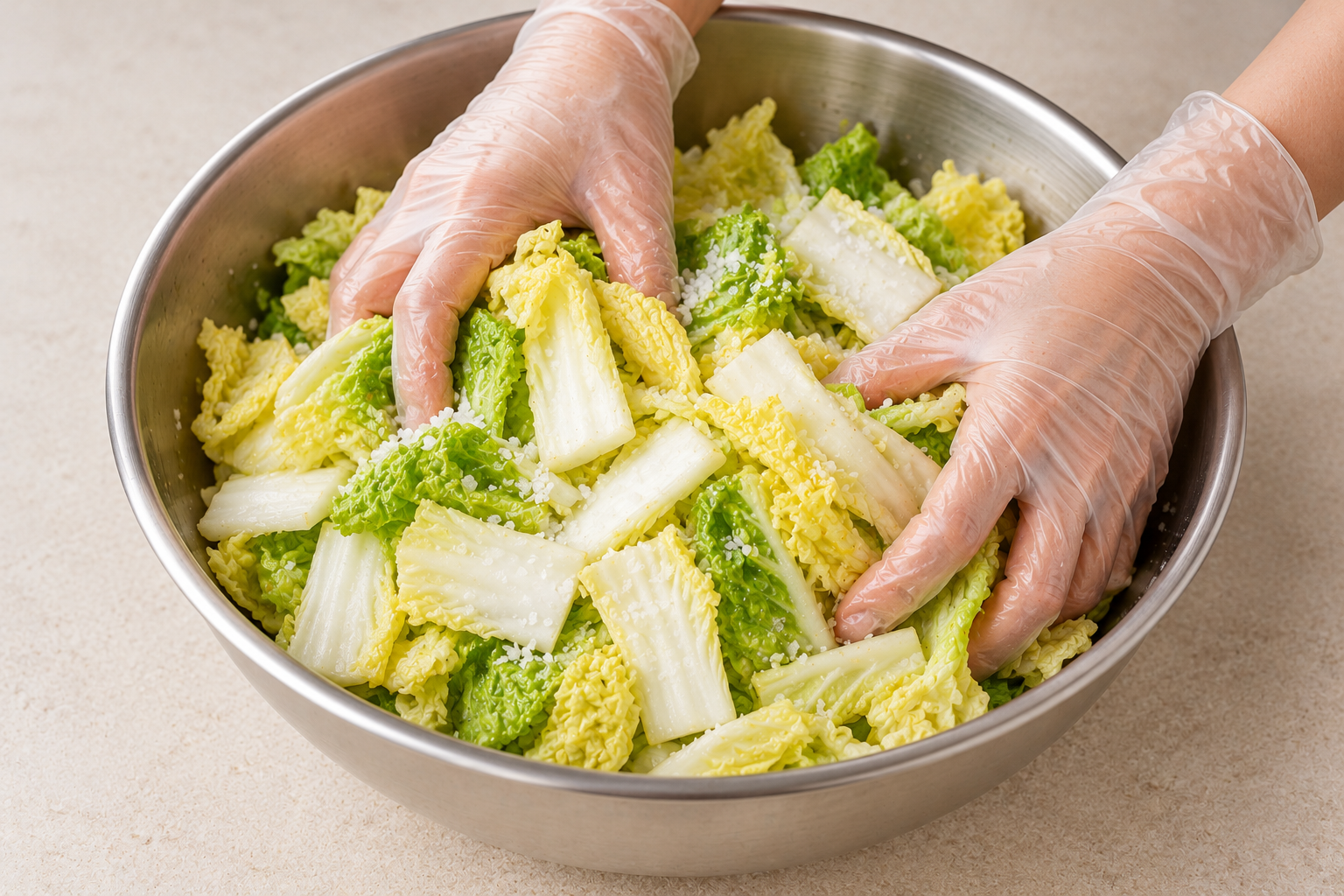
AI-generated salting-stage illustration. The salting and rinsing instructions above govern the process. - Boil flour with remaining water; cool. Add minced garlic, ginger and chili powder, then matchstick radish, onions and optional pear/fish sauce. Mix with cabbage.
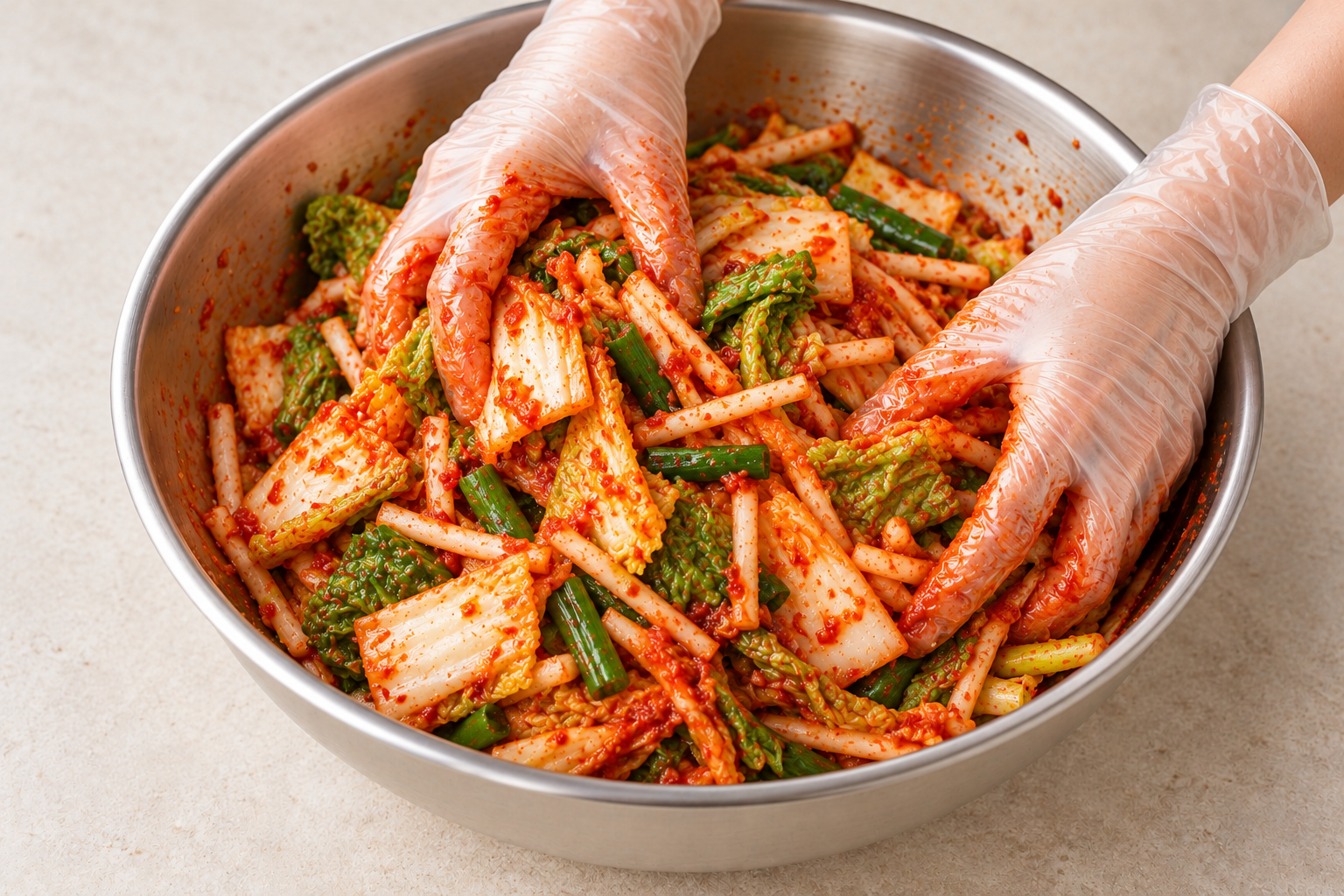
AI-generated mixing illustration, not a record of hands-on recipe testing. - Pack tightly into food-safe containers two-thirds full; close jars fingertip-tight. Refrigerate 3–4 days; keep refrigerated and pressed down afterward. For quality, eat within a week.
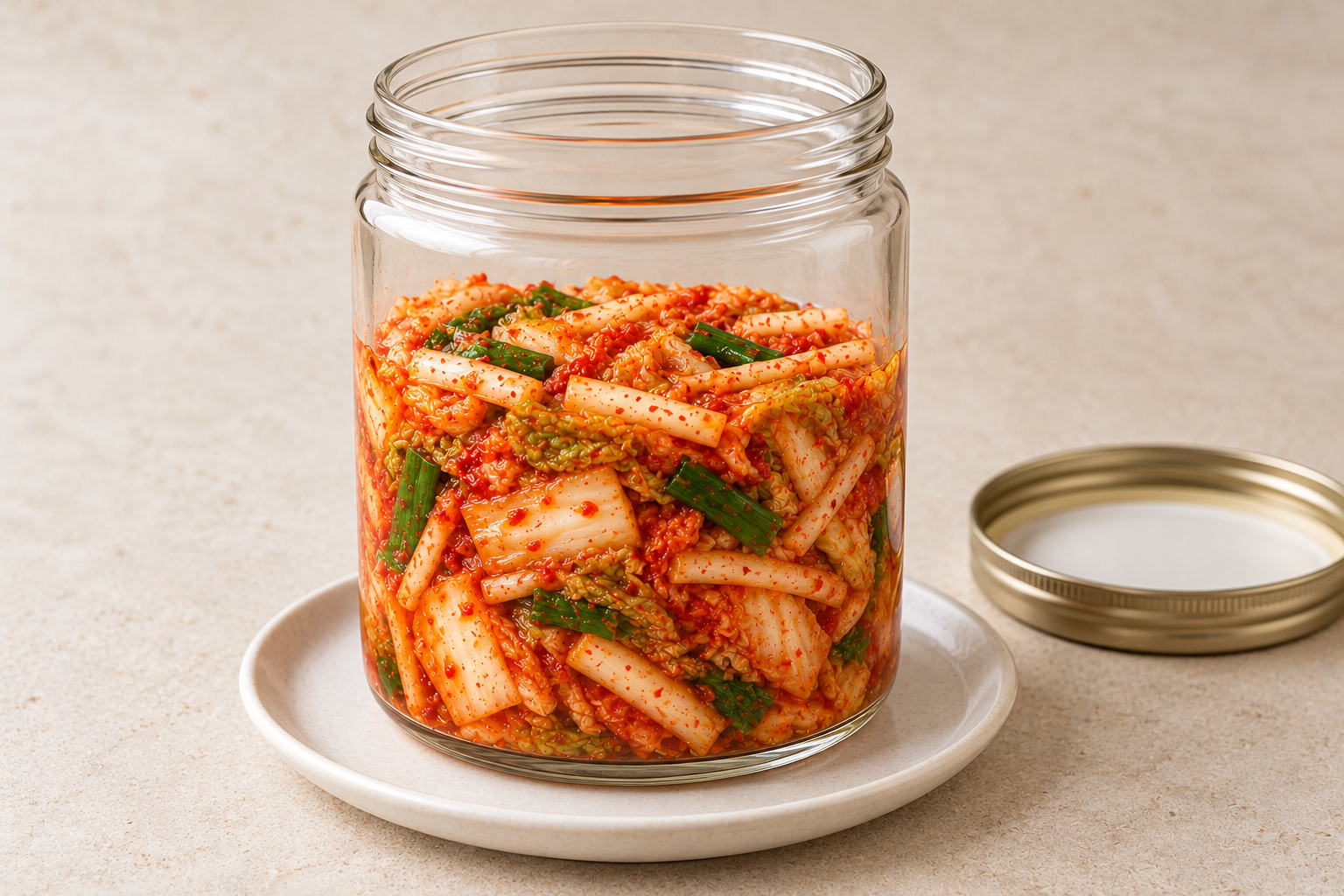
AI-generated packing illustration. Follow the stated container and storage instructions.
Shopping and substitutions
In a US store, look for napa cabbage, not round green cabbage. Gochugaru is the Korean chili ingredient; a generic chili seasoning blend is not the same product. Do not substitute a different salt by an invented gram conversion: crystal size changes how much a cup holds. Use the specified coarse, noniodized type and the stated measurements.
Check package ingredients, especially when allergies matter. Fish sauce contains fish; other kimchi recipes may contain shrimp or other seafood. Seasoning products can introduce additional allergens. Omitting an optional ingredient does not establish that every packaged ingredient or shared kitchen is allergen-free.
Storage and safety limits
Keep the refrigerator at 40°F (4°C) or below, using an appliance thermometer; see FDA home-storage guidance. Keep the container covered and refrigerated. Never treat this recipe as permission to can kimchi or store a sealed jar on a shelf.
Discard a batch with mold, an unusual texture, or an odor inconsistent with normal fermentation. Do not taste suspicious food to decide whether it is safe. FDA cautions that harmful bacteria may be present even when food looks and smells normal. Images cannot establish batch safety.
Read the shared kitchen-safety guide before cooking; the recipe-specific limits above still apply.
Sources and scope
- Colorado State University Extension: Understanding and Making Kimchi, hosted by UC Agriculture and Natural Resources
- University of Georgia Extension: Homemade Kimchi—A Science-Based Guide to Safe Fermentation
- FDA: Are You Storing Food Safely?
Sources checked October 27, 2026 (Korea Standard Time). US kitchen measures are used, with rounded metric equivalents where provided. Total preparation time and final yield have not been measured by DropKingHub. AI-generated images are explanatory examples, not evidence of cooking results or food safety.
QUESTIONS & EXPERIENCES
Comments 0
Share a question or experience about this guide, then keep the conversation going with replies.
No published comments yet. Be the first to share a question or experience.